
Whether you’re walking through a small village or a big city, the smells of traditional Balkan cooking are everywhere: sweet and salty, juicy and savory, just pick your favorite from the air. At any time of the day or night, the smell of traditional food drifts through the streets, coming from windows, balconies, and even stairwells in apartment blocks. In the Balkans, a home-cooked meal made from scratch isn’t just common. It’s expected.
Eating just a salad for lunch? Absolutely frowned upon by every grandma. Never mind if you’re worried about your health, weight, or anything else. Lunch isn’t lunch unless it starts with soup, followed by meat and a side dish, plus a fresh salad, and then something sweet. All homemade. Every time.
And don’t even get me started on the Sunday morning broth “tradition”. You have to prepare it in the biggest pot imaginable so it can be used as a base for all the soups in the week ahead. That pot needs to simmer for hours. And if you think you can just leave it alone for a bit, think again. The key to a clear broth is making sure it never boils, so you need to watch it like a hawk.
Sometimes I’m afraid to admit I don’t have time for it because my weekends are usually packed with outdoor plans as I can already imagine my grandma’s response: “What could be so important? Hiking? Pff. Get up at two in the morning, make the broth, then go climb your mountain. Simple.”
Growing Up in the Kitchen
I used to spend hours watching my grandmas and my mom cook. Sometimes willingly, and sometimes as a form of punishment. Sometimes I was just there to “help,” which mostly meant staying out of the way while absorbing the kitchen chaos. Other times, I was handed a task I couldn’t escape from, like stirring endlessly or grating my weight in apples.
One of my grandmas moved around the kitchen with such speed and agility, I’d forget how old she actually was. She was like an octopus, stirring, washing, kneading, all at once, making sure everything was ready when the family sat down.
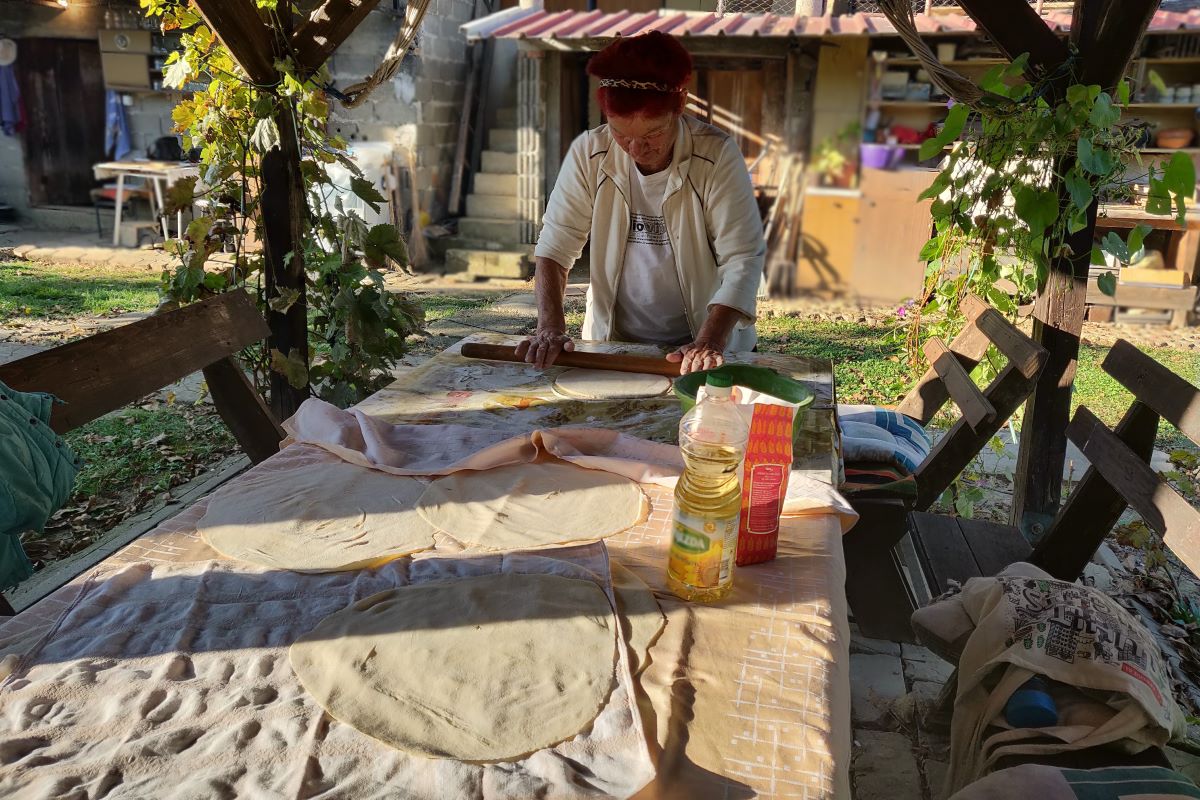
That’s one grandma’s style. The other grandma was… different. She’d wait until everyone was already seated, then casually get up to prepare the salad (the only thing she was supposed to make). My dad prepared the salty dishes, my mom the sweets and yet we still weren’t ready because grandma’s salad wasn’t done. You’d think we’d get used to it. We never did. Still drives us all nuts. But ask her to make pita and she never disappoints, as in the picture above.
What fascinated me most was how none of them ever looked at a recipe. No cookbooks. No notes. No scales. Everything was in their heads. The only exception was my grandma’s sister, who spent most of her life in Germany and is, by now, practically German. So no hard feelings there.
Whenever I asked questions like “How long do you cook this?” or “How much salt do you add?” the answer was always the same: odokativno.
Odokativno: The Art of Estimating
There’s no perfect English translation for this word. “Approximately” is close, but not quite right. At its core, odokativno means “by the eye,” a mystical grandma power that somehow calculates the weight of potatoes just by looking at them. I’m convinced they have built-in laser sensors in their eyes. Of course I tried doing the same. And I failed epically (I’m looking at you batches of gnocchi made from too many boiled potatoes casually sitting in my freezer).
On one of the most popular local recipe websites, the biggest issue with traditional dishes is always the measurements. Every time I land there looking for a recipe, the instructions go like this:
How much salt? Odokativno.
Flour? Usually 500 grams, but odokativno, depending on how it feels when you knead.
Oil? Around 100 milliliters, odokativno, maybe less.
The ingredients are simple, but the process is a science. Or witchcraft. You need to know when the dough is ready. You need to sense the exact water temperature, because lukewarm really means lukewarm, not hot or cold. You have to decide how much of each ingredient to add just by feel. The tiniest mistake can throw the whole thing off.
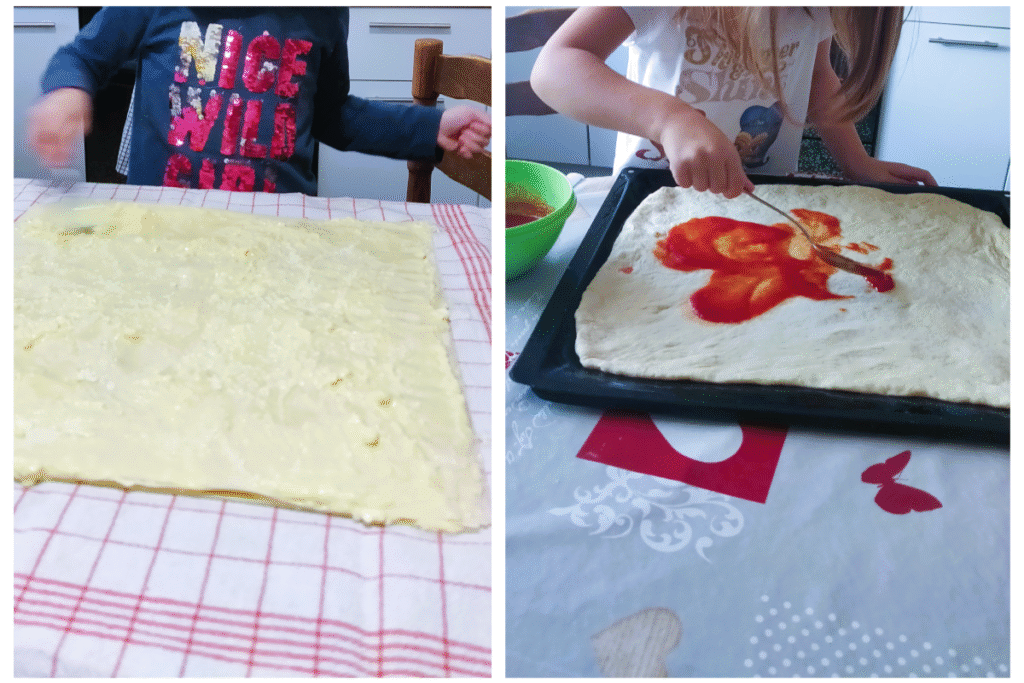
And we’re not talking about Michelin-starred chefs or trained food technicians. These women came from all walks of life – some worked in schools, others in offices, factories, farms, or fields – but no matter what their day job was, they still had to come home and feed the family. All that knowledge was passed down from their mothers and grandmothers. Barely anything was written down. You just had to know it.
The Only Recipe in Traditional Balkan Cooking Is Memory
Still wondering how anyone pulls this off without measuring cups or timers? Yeah, welcome to the Balkan Essence. Good luck escaping once it pulls you in.
So there’s really no better way to learn traditional Balkan cooking than by watching. And touching. Feeling the water, the texture of ingredients, the smell of the spices, making mental notes of every step. And making mistakes. So many mistakes. That’s why we start young and continue to pass the knowledge down, one kitchen session at a time.
If this peek into traditional Balkan cooking made you hungry (in any sense of the word) feel free to reach out. Whether you’re curious about how things are really done in a Balkan kitchen, looking for a recipe tip, or dreaming of a trip that includes a few home-cooked meals, I’m always happy to share more from this culture where love is most often served on a plate.