
simplysee.me by Vanja
  • Home
  • SEO & website Management Services
  • Bergamo Alps Energy
  • Balkan Essence
  • Contact
Author

Vanja

Vanja

In my brain tradition meets innovation, East meets West, analytics meets creativity.

spa experience in lombardy
Bergamo Alps Energy

Spa experiences in Lombardy: Where Relaxation Meets Chaos

by Vanja 19/06/2025

Before diving into describing spa experiences in Lombardy, I feel like this bit of context is important. I’ve often been told by my friends that I’m loud when I speak. I was even scolded for it once by a random grandma in a shopping mall abroad. A busy, loud shopping mall, of all places! Maybe that is why I feel so at home among loud Italians.

But even I, apparently a notoriously loud Balkan person, was caught off guard the first time I visited a spa in Italy. I walked in expecting soft music, calm lighting, and that classic whisper-only atmosphere you usually find in wellness centers. Instead, I was greeted by a level of chatter and clattering that sounded more like Milano Centrale at rush hour, or the roar of Cascate del Serio on opening day. I walked out with my ears ringing and a firm decision to bring my friends there one day, just so they could witness what real loudness looks like.

With Italian spa culture being practically nonexistent, the few places that do exist often feel confused, as if they are still trying to figure out what a spa is supposed to be. And nowhere is that confusion more obvious than in the rules themselves.

Spa etiquette in Italy: a health hazard

That realization hit me the moment I stepped into a sauna. In Italy, you are expected to enter the sauna wearing a bathing suit. That’s not a suggestion. It’s an actual rule. I simply cannot relax in a 90°C room with synthetic fibers clinging to my skin. It feels less like a wellness experience and more like a slow, sweaty punishment. I’m not saying we need to go fully loose about it, but at least a cotton towel wrapped around your body makes some kind of sense. It breathes. It absorbs. It doesn’t try to melt into you.

Then there’s the organizational part which deserves its own mention. Like almost everything in Italy, a spa visit requires planning. You can’t just wake up, stretch, decide “I need some sauna time today” and show up. No. Your arrival must be known, confirmed, logged, and probably blessed by the universe well ahead of time. And even then, things don’t always work the way you expect, because booking in Italy is its own sport.

When I tried to surprise my partner with a spa day, I checked the websites only to discover everything was fully booked for the upcoming days. What I didn’t know was that he had the exact same idea. The difference is that he did it the Italian way. He called, then physically went to their sales point, and somehow came back with two tickets, while I was still refreshing booking pages like a delusional optimist.

Consider this a friendly warning: never rely solely on Italian websites. Even the ones belonging to respectable chains. Italy and technology coexist, but only in a loose, long-distance relationship kind of way. If you want something, call. Or better yet, show up in person.

Spa experiences in Lombardy can be a costly hassle

And then there’s the price. Since you can’t just hop in for a quick after-work relax, the whole system is built around packages. You need to pay close attention to what your ticket actually includes, because everything depends. A full day, a half day, a five-hour entry, access to certain areas only, no access to others. What looks affordable at first often turns out to be something else entirely.

The cheapest ticket I’ve seen was around 40 euros, and that was considered a good deal. Meanwhile, in Sweden, an unlimited bathhouse entry costs less than 10 euros. In Poland, you can even pay by the minute in a public pool’s spa area. The comparison doesn’t exactly make Lombardy’s spa scene feel accessible or spontaneous.

And then there’s the information problem. One of the places officially advertised on Bergamo’s tourism website is not really a spa at all, but a medical facility offering sulphurous baths for people with specific health conditions. The kind of place your grandparents visit through social insurance. Useful, sure. Relaxing, not exactly.

Other spa websites aren’t much better. Some are only half functional. Others send you through a maze of pages filled with glossy photos and vague descriptions, but very little practical information. Eventually, you hit the same sentence every time: Please call to check availability. At that point, you start wondering why the website exists at all.

Because of all this, I haven’t tried many places. Not because I don’t want to relax, but because planning a spa day here often feels like work. Hard work. The kind that makes you think it might actually be easier to book a cheap flight to another country and spend your spa day there instead.

A few places, a few realities

Still, I braved the chaos and visited a few spots, and what follows are my unfiltered field notes rather than polished reviews.

QC Terme San Pellegrino: A “Luxurious” Nut House

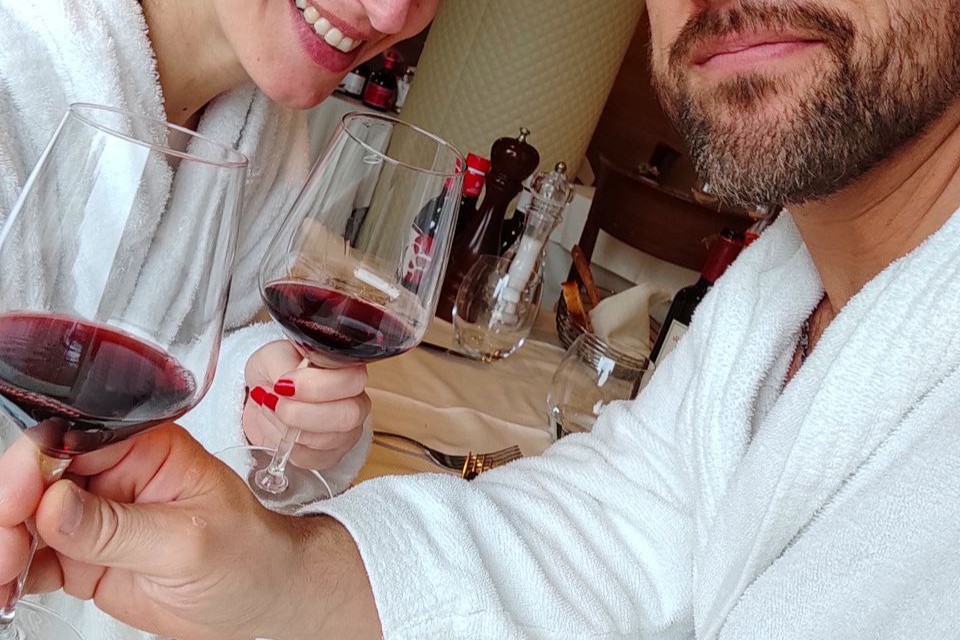
The photos promised luxury and serenity, warm pools, soft lighting, and quiet people sipping prosecco in fluffy robes. Reality? A white-robed stampede. The aperitivo room was overcrowded, echoing with chatter to the point where you could not even hear your own thoughts. It looked like a stylish mental institution and sounded like a cafeteria.


spa etiquette in italy
Luxury, but make it loud. (image source: private archive)

They even give everyone plastic flip-flops, which is fine in theory, until you realize you are surrounded by hundreds of people, each producing that sharp slap-slap-slap sound on marble floors. Multiply that by a thousand feet and you have a rhythm section straight from a nightmare.

If you want a bit of a relaxing experience, skip Saturdays entirely. Go in the evening instead, when the crowds thin out. But if your goal is to gossip and laugh with friends, the louder the better, QC Terme is your place. Nobody will even notice you being noisy.

Miramonti: A Breath of Quiet Air

In this smaller mountain hotel and spa, there were not as many fancy rooms or themed saunas, but what it lacked in variety it made up for in calmness.

We soaked in the outdoor pool while snow dusted the trees around us. No crowds, no chaos, just peace. Lunch was delicious, and even though we were still in bathrobes, this time it actually felt luxurious, not like part of an experiment in collective overstimulation.

Piajo Spa

Then there is the Piajo Spa near Bergamo. It is heavy on ads, yet strangely absent from real conversations. Possibly because the prices alone are enough to make people quietly look away and pretend it does not exist. It’ll be one of my next spa experiences in Lombardy, maybe.

Bergamo Alps Energy Newsletter


Stories, trails, and a few little local details, delivered every now and then.

You can unsubscribe anytime. For more details, review the Privacy Policy.

You’re in!


Thanks for subscribing. Looking forward to sharing stories, trails, and a little bit of the Bergamo Alps with you soon.

Making peace with Lombardy’s spa chaos

So yes, spa experiences in Lombardy are a mixed bag. Some places feel like a stylish chaos experiment, while others offer pockets of peace that make you wonder why you even bother with the crowds elsewhere. Prices can be steep, rules can be baffling, and booking can be its own adventure.

At the end of the day, Italy’s spa culture might be quirky, confusing, and sometimes chaotic, but surviving the madness makes the calm moments feel that much sweeter. It also explains why I’m fully on board with my Northern European friend’s plan to build a sauna at home. Honestly, it might be the most relaxing idea of all.

19/06/2025 0 comments
0 FacebookTwitterPinterestEmail
smoking culture in the balkans
Balkan Essence

Smoking Culture in the Balkans: Tradition, Ritual, and Daily Life

by Vanja 12/06/2025

There’s one thing impossible to miss when visiting – the smoking culture in the Balkans. Smoke curls around street corners, drifts through cafés, and follows people like an invisible, persistent shadow. Whether you’re wandering a market, sitting down for coffee, or sharing a meal, chances are someone nearby is lighting up.

In the Balkans, smoking isn’t just a habit. It’s part of daily life, woven into conversations, meals, and celebrations. These countries rank high on global smoking charts because people don’t just smoke — they smoke like chimneys! 

Years ago I joked (and still stand by it) that if I were blindfolded, earplugged, and dropped at Belgrade airport, I’d know exactly where I was the moment the terminal doors opened. How? The smell of smoke. And the fact that no one’s waiting inside for their loved ones because they’re all outside, cigarette in hand.

Smoking Culture in the Balkans as a Social Ritual

What’s considered “recreational smoking,” just a few cigarettes a day, elsewhere might raise eyebrows, but here it’s hardly seen as a problem, especially when it follows long-standing social smoking traditions. 

Social smoking is supposed to mean only when you’re out with friends but in the Balkans social gatherings happen almost daily. Morning coffee blends into afternoon drinks, which turn into long evenings of ‘sijelo’ and before you know it, “occasional” smoking is just… smoking. In the Balkans, coffee itself is a social ritual, and cigarettes often come along for the ride.

Here a cigarette before and after a meal feels as natural as the meal itself. And on a night out, a drink in one hand and a cigarette in the other is almost choreography. Without the cigarette, people don’t know what to do with the spare hand.

The Puš-Pauza: More Than Just a Break

There’s also a ritualistic side to smoking. Even at weddings, family dinners, or workdays, people step outside for a cigarette. These smoke breaks, or puš-pauze, aren’t only about nicotine. They’re a few stolen minutes of escape.

Leaning against a wall or huddled under a tenda, conversations soften, jokes land easier, and time slows down. That’s why even non-smokers, myself included, sometimes tag along. It’s less about the cigarette itself and more about the pause it creates. Those few minutes outside have been holding space in Balkan life for decades, a little glimpse of ‘ćejf’, the art of taking life slow and enjoying every tiny moment.


smoking in the balkans
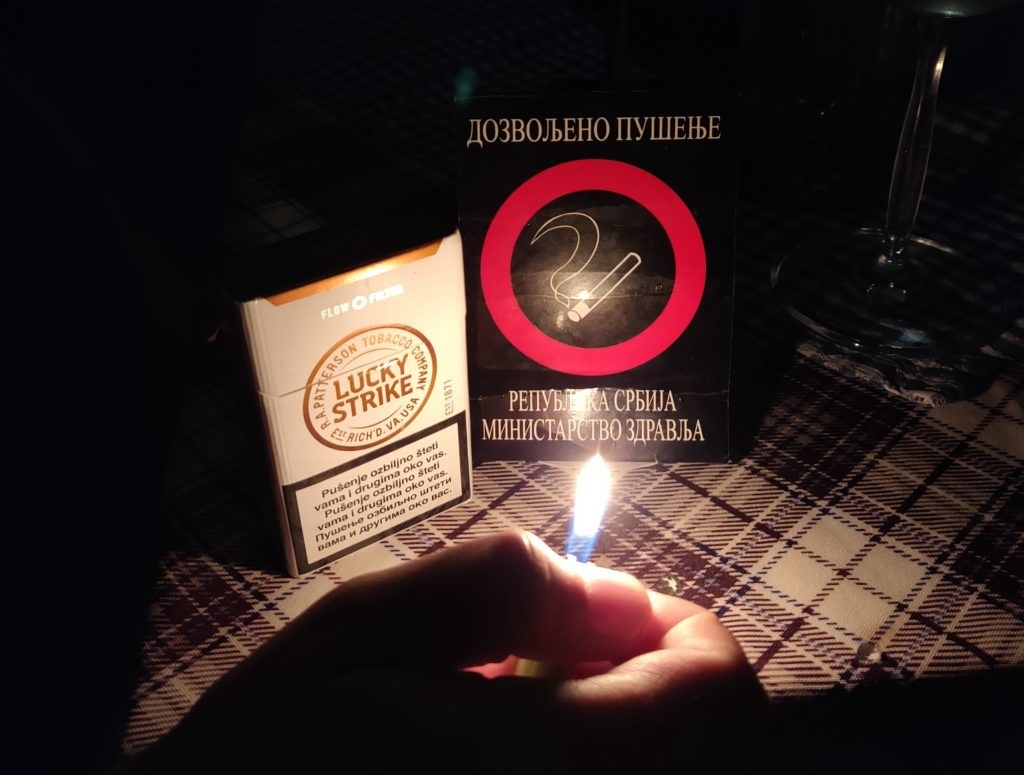
Smoking allowed sign in kafana (source: private archive)

Traveling as a Non-Smoker: What to Expect

Visiting the Balkans as a non-smoker? You’ll notice the smoke right away, especially indoors. Cigarette after cigarette, the air thickens until you feel like you could cut it with a butter knife. If you’re not used to it, your eyes start itching and turning red, and you quickly realize that clean air is nowhere in sight. You might even wonder if sitting on the floor will help you dodge the smoke cloud at head height. Spoiler: it won’t.

Governments have tried to curb tobacco use by raising taxes, limiting ads, banning smoking in schools, hospitals, and partially in cafés and restaurants. On paper, it all sounds solid. In reality, when most of the population smokes, these rules are hard to enforce. An older but still relevant piece on the tobacco industry’s push into Eastern Europe shows how cigarette companies helped weave smoking into the fabric of social life, making it much harder to untangle today.

My Non-Smoker Survival Tactics

As a non-smoker, I’ve learned how to navigate the Balkan smoking habits that shape daily life. Living here means you adapt and sometimes just laugh at the absurdity of it all.

One classic tip for non-smokers? Brace yourself for extra laundry. Smoke sneaks into everything. Socks, shirts, even your favorite scarf, nothing is safe. Think of it as a smoky souvenir you didn’t ask for. I speak from experience. During a longer stay in my hometown, my mom suggested I wash all my clothes before flying back. I agreed, but when I opened my suitcase in my non-smoking flat, bam! A wall of smoke hit me. Every item went straight back into the washing machine. After that, even my cosmetics bag became machine-washable.

At family meals, I negotiate: “One smokes first, then the other.” I can’t stop them, but at least I can cut the smoke dose in half. I even threatened to bring a snorkeling mask so I could sit at the same table without suffocating. Honestly, I wasn’t even joking.

Growing up, I usually sat in the back of the car while my mom and sister chain-smoked up front. My solution? Roll down both back windows like my life depended on it. I still do the same at home, even in the dead of winter. They’re not happy about it, but hey, if they’re making me uncomfortable, I’ll do the same to them. An eye for an eye!

Finding the Charm Behind the Haze

But even if you’re a non-smoker, try not to let the smoke ruin your trip. Understand that locals aren’t trying to make you uncomfortable; it’s just part of their daily life. A polite word usually works better than a complaint, and most people are happy to adjust when asked. Or if you can handle it, toss a playful, curse-filled joke their way. Sometimes, they might respond with a puff in your direction and then smirk as they put the cigarette out, it’s Balkan humor at its finest.

If you lean into it a little, breathe through the haze, and accept the rhythm of long coffees, short smoke breaks, and endless chatter, you might discover a side of Balkan life that’s both messy and strangely welcoming.

If you’ve spent time in the region, I’d love to hear your take on the smoking culture in the Balkans. Did it surprise you, frustrate you, or maybe even feel a little charming? I’m always curious how other travelers experience this part of daily life.

P.S. Have you noticed this whole post is about smoking and not vaping? You know why? In the Balkans, vaping is still very much a “niche hobby,” while cigarettes run the show.

12/06/2025 0 comments
0 FacebookTwitterPinterestEmail
consistent blog voice
Blog Management Services

The Importance of a Consistent Blog Voice

by Vanja 22/05/2025

You’ve probably landed many times on a company blog that felt a bit… well, off. One post sounds like it came from a polished marketing team, and the next reads like a last-minute internal note. Some entries are months apart, others appear with no clear pattern. It’s disorienting. A lack of consistent blog voice makes it hard to know what to expect. And when that happens, it’s easy to click away and not return. That’s what I do, at least.

On the other hand, there’s something comforting about a blog that feels familiar. When the tone stays steady and the ideas consistently hit the mark, it’s like hearing from someone you know, someone whose perspective you trust. That kind of consistency doesn’t just happen by accident. It takes intention and a bit of planning, but it’s what keeps us, the readers, engaged over time.

Keep Your Voice, Even When the Topic Changes

Blogging isn’t just about writing. It’s about showing up with clarity and purpose. When your posts jump between voices, topics, or timelines, it becomes hard for readers to connect. It’s like having a conversation with someone who changes subjects without warning. You lose the thread, and with it, the motivation to stick around.

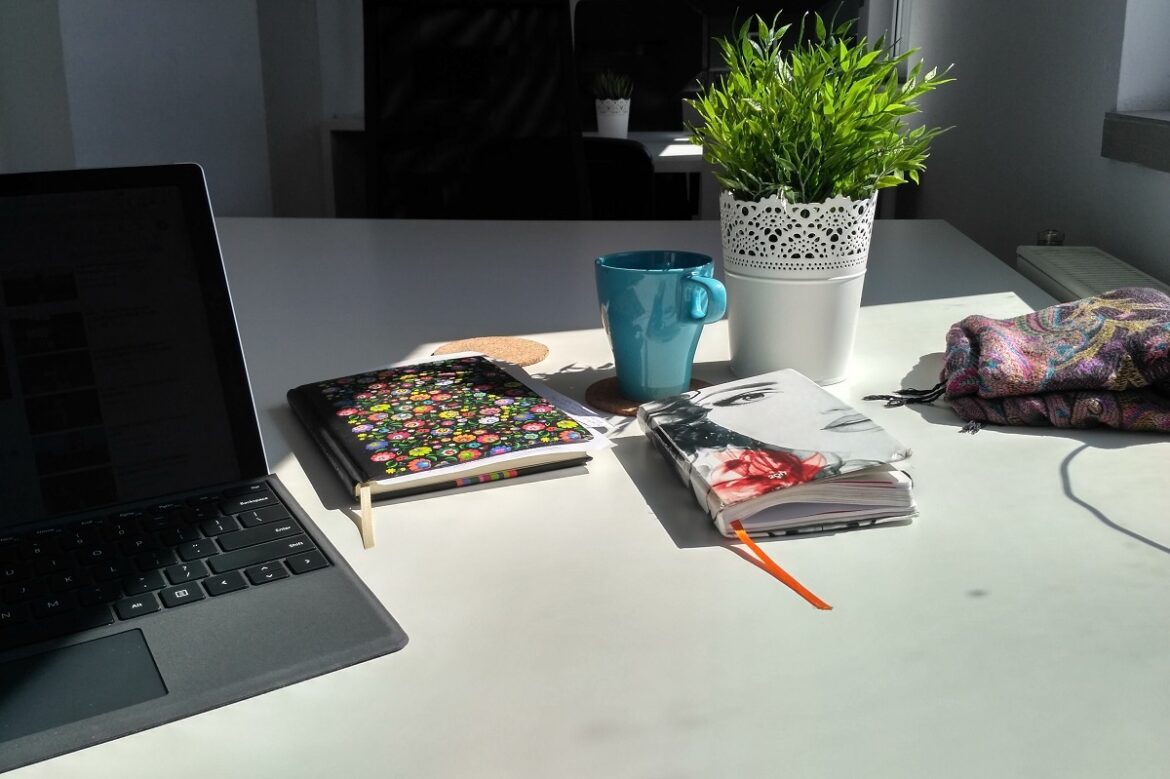
That’s why a steady voice and publishing rhythm matter so much. For example, I’ve split my own website into three sections. Each one focuses on a different topic, but I write all of them in the same voice – my own. Visitors can stick with the section that brought them there or explore others, but either way, they’ll still hear me. Sometimes more polished, sometimes more casual or even cynical, but always recognizably me.


consistent blog voice on different topics
Same garden, different fruits. That’s exactly how I think of my website. (source: private archive)

When your blog sounds like you every time and shows up reliably with something useful, readers start to trust it. That trust builds into loyalty, and that’s when your content begins to work harder for your business.

Why Consistent Blog Voice Matters

I’ve seen a lot of business blogs with real potential lose momentum because they never settled into a clear voice or kept jumping from one idea to the next. They start strong, then go quiet for months. All that effort ends up going to waste. That’s why I believe in a blogging approach that’s steady, thoughtful, and built to last. It keeps working in the background while you focus on running your business.
The voice of a blog is more than just how it sounds. It’s the tone, the language, and the way it speaks to people. Whether you lean casual and friendly or more polished and informative, the key is consistency. A consistent blog voice helps every post feel like it’s coming from the same person, which makes it easier for readers to connect.


That kind of consistency helps:

  • Build trust with the people you’re trying to reach
  • Make your content easier to follow and remember
  • Give visitors a clear sense of what your business is about

Over time, people start to recognize that voice. They begin to rely on it. And if your posts are genuinely useful, whether you’re answering common questions, sharing behind-the-scenes insights, or offering practical advice, they’re more likely to get saved, shared, and passed along.

Consistent Content Builds Authority

Regular blogging can also help your site show up in search results more often. But that doesn’t happen overnight. It takes a little patience and a plan. Blogs that publish helpful content on a regular basis tend to build domain authority over time. That’s just a way of saying search engines start to take your site more seriously. Consistently creating informative, high‑quality content helps build trust with both users and search engines, leading to higher organic rankings. Informative, relevant posts don’t just attract readers. They get saved, shared, and linked to. And those links from other websites give your own site a boost in search rankings.

To build real momentum, you need a clear strategy, a publishing rhythm that fits your workflow, and a consistent blog voice that helps readers feel grounded every time they land on a new post. A clear and consistent blog voice can quietly do a lot of heavy lifting for your business, even while you’re busy with everything else.

Letting Your Blog Work for You Without Burning Out

Staying on track with that kind of strategy takes energy, focus, and sometimes the right support. That’s the kind of work I do as a blog manager. I help clients keep their content purposeful, consistent, and aligned so it keeps doing its job, even when they’re focused on other parts of the business. If blog consistency feels just out of reach, let’s talk. I help people turn scattered ideas into steady, sustainable content – with room to breathe.

With the right support, your blog can run on autopilot by publishing smart, thoughtful content that drives results while you focus on running your business. And really, that’s the goal: a blog that sounds like you, works for you, and keeps showing up week after week.

22/05/2025 0 comments
0 FacebookTwitterPinterestEmail
Grand hotel at San Pellegrino Terme
Bergamo Alps Energy

Is visiting San Pellegrino Terme worth the drive?

by Vanja 15/05/2025

If you’re anything like me, the name San Pellegrino probably just brings to mind that sleek green bottle of fizzy water, the kind restaurants serve when they’re trying to be just a little too fancy. I had no clue it was actually named after a real town. So when I learned there’s an actual place called San Pellegrino Terme, tucked into a narrow stretch of the Brembana Valley, I did a full double take. But I realized that’s a theme around here: naming things after the places they come from. Looking at you, town of Gorgonzola! But that’s a different story for another time.

Let’s get back to this tiny town that attracts visitors all year round, and honestly, I still can’t figure out why. I mean, I come here just for the chill. Literally and mentally. The town is nestled so tightly between the peaks that the sun barely gets a proper shot at it. Because of that, the temperature is always a few degrees cooler than in the surrounding areas.

So what’s there to do and see in San Pellegrino Terme?

The view that steals the show in the town center is the Grand Hotel. It looks like something out of a film, all Belle Époque elegance and faded grandeur. Once upon a time, it was full of cutting-edge luxury, but it’s been closed for over 40 years. They’re finally restoring it, with plans to reopen as a fancy resort around 2030! Until then, we all can just admire it from the outside and imagine what it used to be like.


Casino Municipale at San Pellegrino Terme
Casinò Municipale entrance (source: private archive)

Directly across from it, a bit up on the slope, is the Casinò Municipale. It’s no longer a casino, but now part of QC Terme. It acts as the welcome area for the spa, but it’s also possible to visit the building through a guided tour once a month where they actually talk about the history and architecture. I have to say that I saw the inside because I was headed for a spa day, but even then it was the kind of place where someone like me, who usually just says “ooh, fancy ceiling,” walked in and said, “Okay wow, this is something.”

There’s also a small funicular here, but to be honest, I’ve never bothered going up. There’s just not much waiting at the top. No café, no proper viewing spot, not even a vending machine to sip something while taking in the view. So I usually skip it and go for more rewarding activities like gelato, pizza, or a good soak at the spa.

Chasing chill along the Brembo path

But okay, eating and chilling aren’t the only things you can do here. There are actually loads of walking and cycling paths in the area, if you’re in the mood to move a little. My favorite? No surprise, it’s the easiest one. Just a long, lazy walk along the Brembo river.


River Brembo near San Pellegrino Terme

Quick flashback: the first time my partner brought me here, he was so excited to show me the Brembo river. Like, properly proud. He pointed it out and I looked at the river, then at him, then back at the river. And I asked, completely sincerely, “Are you joking?” He wasn’t. See, here in Lombardy, the Brembo is considered a real river. A respected one.But to me, someone who grew up on the riverbank of the Danube, the second-largest river in Europe and a wide, mythic presence, this just looked like a very lively stream.


Anyway, back to the path. The route I like to take is actually part of the Val Brembana bike path that spans from Zogno all the way up to Piazza Brembana. It switches back and forth between riverside stretches and old railway tracks, with sections that go through tunnels carved directly into the rock. Most importantly, it’s super flat and totally easy. Perfect for those days when you’re not in the mood for a full-on hike but still want to be out in the fresh air.

And a small local tip: if you turn toward Ambria, you’ll pass right by the San Pellegrino water factory and distribution center. You can’t miss it, it’s massive. But keep an eye out for a little pipe on the side of the path that’s constantly pouring out fresh water. That’s the water, straight from the source, completely free.

Bergamo Alps Energy Newsletter


Stories, trails, and a few little local details, delivered every now and then.

You can unsubscribe anytime. For more details, review the Privacy Policy.

You’re in!


Thanks for subscribing. Looking forward to sharing stories, trails, and a little bit of the Bergamo Alps with you soon.

A Quick Dose of Charm

All in all, San Pellegrino Terme has this quiet, old-school charm. The kind that feels nice for a short visit, but probably not more than that. There’s only so much strolling and sparkling water one can do. Still, it’s a solid jumping-off point if you’re planning to explore more of the Brembana Valley, which I fully recommend. I share stories and tips like that in the newsletter above. Just the kind of things I’d text a friend before their trip.

I’ll let you find out for yourself what bottled water actually shows up on the tables here. Let’s just say… things aren’t always as bubbly as they seem.

15/05/2025 0 comments
0 FacebookTwitterPinterestEmail
pita traditional balkan cooking
Balkan Essence

Traditional Balkan Cooking: How Grandmas Feed an Army Without Recipes

by Vanja 08/05/2025

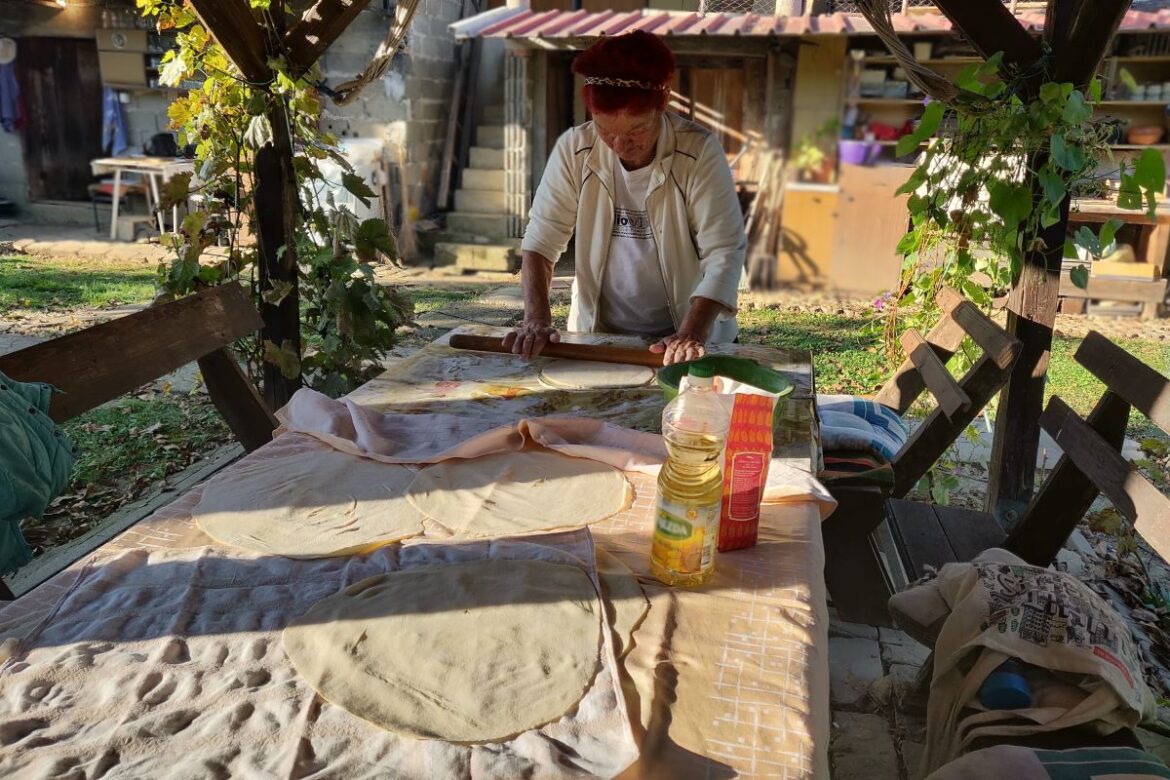
Whether you’re walking through a small village or a big city, the smells of traditional Balkan cooking are everywhere: sweet and salty, juicy and savory, just pick your favorite from the air. At any time of the day or night, the smell of traditional food drifts through the streets, coming from windows, balconies, and even stairwells in apartment blocks. In the Balkans, a home-cooked meal made from scratch isn’t just common. It’s expected.

Eating just a salad for lunch? Absolutely frowned upon by every grandma. Never mind if you’re worried about your health, weight, or anything else. Lunch isn’t lunch unless it starts with soup, followed by meat and a side dish, plus a fresh salad, and then something sweet. All homemade. Every time.

And don’t even get me started on the Sunday morning broth “tradition”. You have to prepare it in the biggest pot imaginable so it can be used as a base for all the soups in the week ahead. That pot needs to simmer for hours. And if you think you can just leave it alone for a bit, think again. The key to a clear broth is making sure it never boils, so you need to watch it like a hawk.

Sometimes I’m afraid to admit I don’t have time for it because my weekends are usually packed with outdoor plans as I can already imagine my grandma’s response: “What could be so important? Hiking? Pff. Get up at two in the morning, make the broth, then go climb your mountain. Simple.”

Growing Up in the Kitchen

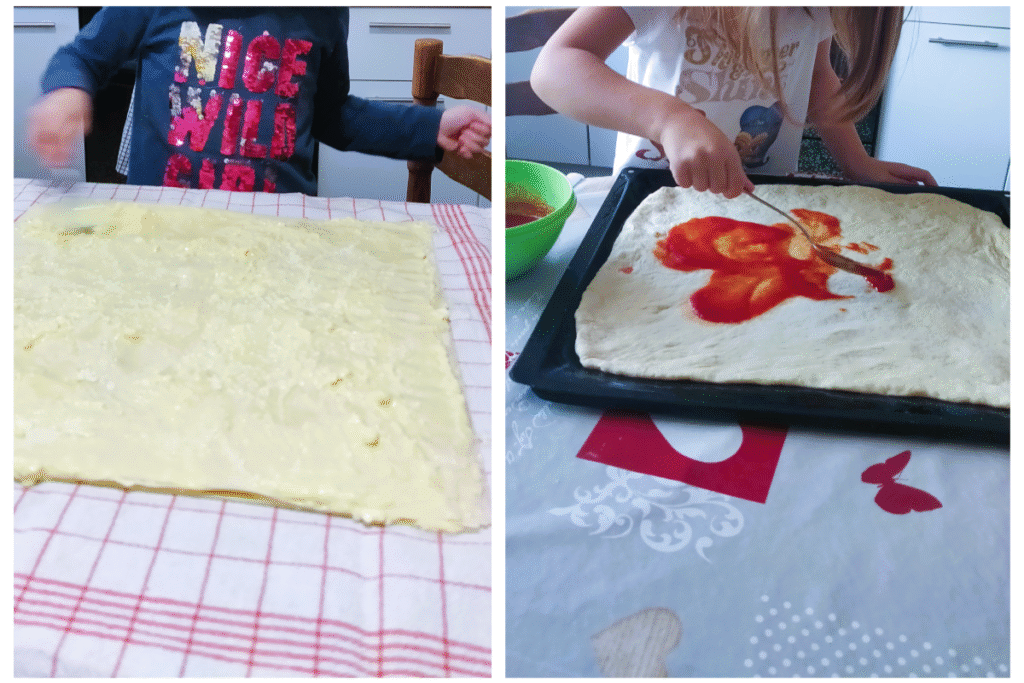
I used to spend hours watching my grandmas and my mom cook. Sometimes willingly, and sometimes as a form of punishment. Sometimes I was just there to “help,” which mostly meant staying out of the way while absorbing the kitchen chaos. Other times, I was handed a task I couldn’t escape from, like stirring endlessly or grating my weight in apples.

One of my grandmas moved around the kitchen with such speed and agility, I’d forget how old she actually was. She was like an octopus, stirring, washing, kneading, all at once, making sure everything was ready when the family sat down.

That’s one grandma’s style. The other grandma was… different. She’d wait until everyone was already seated, then casually get up to prepare the salad (the only thing she was supposed to make). My dad prepared the salty dishes, my mom the sweets and yet we still weren’t ready because grandma’s salad wasn’t done. You’d think we’d get used to it. We never did. Still drives us all nuts. But ask her to make pita and she never disappoints, as in the picture above.

What fascinated me most was how none of them ever looked at a recipe. No cookbooks. No notes. No scales. Everything was in their heads. The only exception was my grandma’s sister, who spent most of her life in Germany and is, by now, practically German. So no hard feelings there.

Whenever I asked questions like “How long do you cook this?” or “How much salt do you add?” the answer was always the same: odokativno.

Odokativno: The Art of Estimating

There’s no perfect English translation for this word. “Approximately” is close, but not quite right. At its core, odokativno means “by the eye,” a mystical grandma power that somehow calculates the weight of potatoes just by looking at them. I’m convinced they have built-in laser sensors in their eyes. Of course I tried doing the same. And I failed epically (I’m looking at you batches of gnocchi made from too many boiled potatoes casually sitting in my freezer).

On one of the most popular local recipe websites, the biggest issue with traditional dishes is always the measurements. Every time I land there looking for a recipe, the instructions go like this:

How much salt? Odokativno.
Flour? Usually 500 grams, but odokativno, depending on how it feels when you knead.
Oil? Around 100 milliliters, odokativno, maybe less.

The ingredients are simple, but the process is a science. Or witchcraft. You need to know when the dough is ready. You need to sense the exact water temperature, because lukewarm really means lukewarm, not hot or cold. You have to decide how much of each ingredient to add just by feel. The tiniest mistake can throw the whole thing off.


traditional balkan cooking
Apprentice in action. (source: private archive)

And we’re not talking about Michelin-starred chefs or trained food technicians. These women came from all walks of life – some worked in schools, others in offices, factories, farms, or fields – but no matter what their day job was, they still had to come home and feed the family. All that knowledge was passed down from their mothers and grandmothers. Barely anything was written down. You just had to know it.

The Only Recipe in Traditional Balkan Cooking Is Memory

Still wondering how anyone pulls this off without measuring cups or timers? Yeah, welcome to the Balkan Essence. Good luck escaping once it pulls you in.

So there’s really no better way to learn traditional Balkan cooking than by watching. And touching. Feeling the water, the texture of ingredients, the smell of the spices, making mental notes of every step. And making mistakes. So many mistakes. That’s why we start young and continue to pass the knowledge down, one kitchen session at a time.

If this peek into traditional Balkan cooking made you hungry (in any sense of the word) feel free to reach out. Whether you’re curious about how things are really done in a Balkan kitchen, looking for a recipe tip, or dreaming of a trip that includes a few home-cooked meals, I’m always happy to share more from this culture where love is most often served on a plate.

08/05/2025 0 comments
0 FacebookTwitterPinterestEmail
outsourcing blog management
Blog Management Services

Outsourcing Blog Management: Is It Worth the Investment?

by Vanja 24/04/2025

Running a blog sounds simple, until you’re deep in the weeds with drafts, edits, keyword research, visuals, and that sinking feeling that it’s been three weeks since your last post went up. At some point, many business owners and entrepreneurs hit a crossroads: Do I keep juggling all this myself, or is it time to outsource?

If that’s where your head’s at, you’re not alone. Let’s break it down together and look at what outsourcing blog management actually involves, what you gain from it, and how to figure out if it’s the right move for you.

What Does It Actually Involve?

If you’re imagining “outsourcing blog management” means hiring someone to write a few posts now and then, it’s actually much more. A blog manager can take care of a full content workflow, not just the writing. That usually includes:

  • Planning topics based on your business goals
  • Keyword research and SEO optimization
  • Writing or coordinating with writers
  • Editing, proofreading, and formatting
  • Sourcing or creating visuals
  • Scheduling posts and hitting publish
  • Reviewing analytics and updating older content

Some also help with promotion, like prepping newsletter content or creating snippets for social media.

Creating a blog strategy that actually works involves more moving parts than most people expect, which is why having someone manage it all can make a big difference.

Why Even Consider Outsourcing Blog Management?

Because your time is limited. And let’s be honest, even if you enjoy writing, blogging takes up way more than just writing time. Strategy, edits, formatting, SEO, scheduling – it adds up fast.

Here’s where outsourcing starts to make sense:

1. You get your time back

A well-run blog keeps growing in the background while you stay focused on client work, offers, or just getting some breathing room.

2. You stay consistent

A blog manager helps you stick to a posting rhythm, even during your busiest weeks. No more vanishing from your blog for months at a time.

3. You get strategic support

Instead of guessing what to post next, you have someone thinking about how content supports your offers, your audience, and your growth.

4. You’re not doing it all alone

Having someone on board means you’re not the only one thinking about headlines, SEO, editing, or what to publish next. That in itself is a relief.


strategy for blog management outsourcing
(source: Unsplash)

But… Is It Worth the Cost?

Let’s talk money for a minute.

Yes, outsourcing blog management is an investment. Prices can vary depending on whether you work with a freelancer, a small team, or an agency. Some charge a few hundred a month, others may be in the thousands based on how much they’re handling.

The Content Marketing Institute offers helpful context on what businesses typically spend and what goes into setting a reasonable budget.

But here’s a more useful question to ask: What is your blog doing for your business right now? And what might it do with more consistency, strategy, and support?

If your blog already brings in traffic, warms up leads, or helps with sales, improving it is an investment in something that’s already working. And if your blog has been a bit neglected, outsourcing might be the thing that finally helps it become useful again.

Also worth thinking about: How much time are you spending on your blog? What else could you be doing with that time?

When Outsourcing Makes Sense

You might be ready to bring in support if:

  • You’re struggling to post consistently
  • You don’t have a content plan
  • SEO feels important but unclear
  • You’ve got an offer or launch coming up and no content ready to support it
  • You want your blog to help your business, but it’s too much to handle alone

This doesn’t mean letting go of control. It just means you’re not the one managing every little detail. You’re still steering the direction and making the decisions.

What to Look For in a Blog Manager

Not all blog managers approach things the same way. You’ll want to work with someone who:

  • Understands your business and audience
  • Helps you refine your voice
  • Thinks in terms of content strategy, not just word count
  • Has a clear process for working with clients

You want someone who treats your blog like a meaningful part of your business, not just a task to check off.

Final Thoughts (and a Nudge)

If you’re reading this and thinking that blogging used to feel fun but now just feels heavy, you’re not alone. You don’t have to do all of it by yourself. You also don’t have to reinvent the wheel every time you want to post something.

Your blog can be consistent, helpful, and aligned with your business without taking over your whole schedule. You stay in charge of the direction, and I’ll take care of the day-to-day blog tasks. If that sounds like the kind of support you’ve been needing, book a free discovery call.

24/04/2025 0 comments
0 FacebookTwitterPinterestEmail
cascate del serio
Bergamo Alps Energy

Cascate del Serio: The Waterfall That Only Shows Up Five Times a Year

by Vanja 17/04/2025

I visited the Cascate del Serio (translation: Serio Falls) for the first time last summer. It’s not the kind of waterfall you casually come across while exploring. The falls only appear five times a year, when the dam is opened on a fixed schedule. Because it’s such a rare event, everyone wants to see it, which means heavy traffic heading into Valbondione on opening days. Not every trail in the Bergamo Alps comes with this kind of crowd. Some, like the Selvino hike, offer a much more peaceful day out – and you can even get there without a car.

So why is this waterfall so rarely visible in the first place?

Cascate del Serio is Italy’s tallest waterfall, with a drop of 315 meters across three stages. Unlike most waterfalls, they don’t flow year-round. They only come to life on specific dates, when the Barbellino dam is opened. The dam was built in the 1930s as part of a hydroelectric project, designed to regulate the flow of the Serio River while protecting the surrounding environment and managing water reserves.

The municipality announces the opening dates in advance, usually between June and October. Each release lasts about 30 minutes, during which the dry cliff face is transformed into a thundering wall of water. Thousands of visitors gather to witness it, filling the hiking trails and lookout points with quiet excitement.

This rare schedule is partly about conservation, but it also adds to the experience. The waterfalls are not always there to see. They appear only briefly, when human infrastructure and natural forces align. That fleeting quality is what makes them special. You don’t just see a waterfall. You wait for it, and that changes everything.

Getting There Just in Time

As mentioned, thousands of people head to Valbondione for these rare openings, so traffic is to be expected. We hadn’t allowed quite enough time for the drive, and by the time we arrived, parking was already tight. The municipality organizes parking for the event, but since we were among the last, we ended up at the very beginning of the village. That meant walking through the entire place just to reach the trailhead, which added more time than we had anticipated.


waiting for cascate del serio
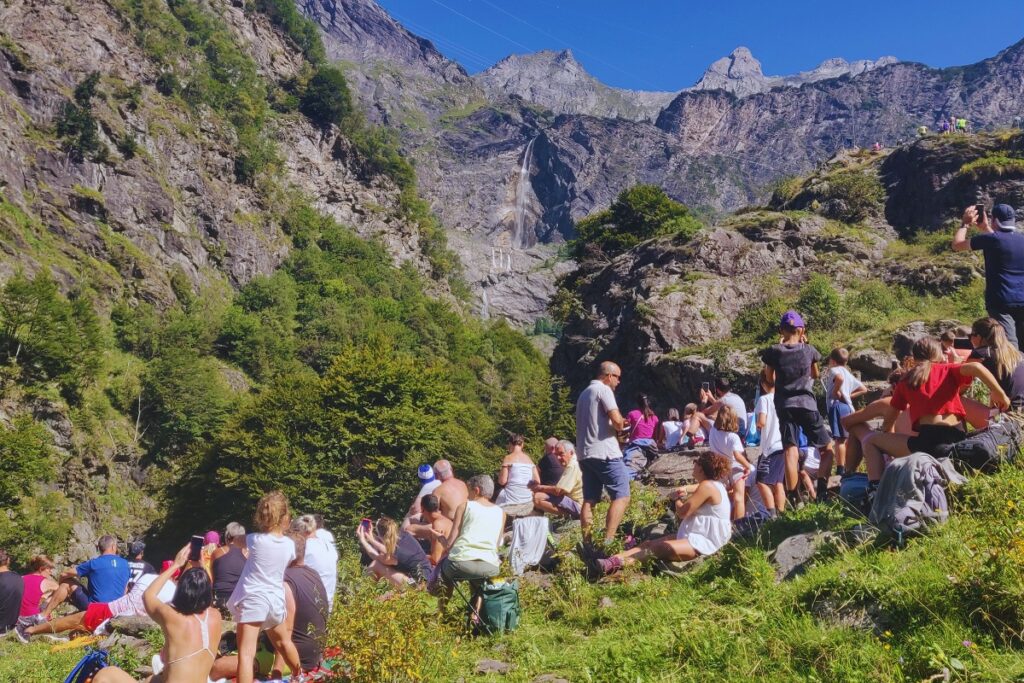
Waiting for Cascate del Serio (source: private archive)

We followed the CAI 305 route, listed as the easiest option, but it didn’t feel all that straightforward. Maybe it was the crowd – lots of other people were also running late, and everyone was rushing to find a viewpoint. At one point, we missed a turnoff and ended up off track. That small mistake cost us more time and definitely added to the stress.

We were already hurrying downhill toward the Grandi Macigni area when a loud siren echoed through the valley. It was the signal that the dam was about to open. That sound kicked us into a full sprint. Fortunately, we arrived just in time. We found a spot among the crowd already gathered, all of us facing the cliffs with a kind of shared anticipation.

The Waterfall’s Powerful and Brief Appearance

The waterfall didn’t appear all at once. At first, there was a sudden rush of dirt, dust, and loose rocks tumbling over the edge. This initial surge was pushed out by the immense water pressure building behind the dam, clearing away anything that had collected since the last opening. Watching this raw, unfiltered power carve its own path down the cliff was strangely satisfying.

Then, almost as if on cue, the water shifted from muddy and chaotic to clear and powerful. The flow became steady and pure, spilling down the cliff face with relentless force. For the next 30 minutes, we stood completely still, absorbed in the spectacle of thousands of cubic meters of water plunging 315 meters in three dramatic drops. The sheer scale was overwhelming, and the roar of the water filled the valley with a deep, resonant sound that seemed to vibrate through the ground itself.

I hadn’t expected to be so captivated, but the combination of size, sound, and movement held everyone’s attention. Then, just as suddenly as it had begun, the cascade stopped. The roar faded, the valley fell silent, and the cliff once again appeared dry and still, almost as if nothing had happened. 

Looking Ahead to the Cascate del Serio Nighttime Opening

This year, I’m planning to return for one of the Cascate del Serio’s rare nighttime openings. The next one is scheduled for the 12th of July 2025, from 22:00 to 22:30. Unlike the daytime event, the waterfall is lit from below by spotlights, creating a very different mood. From what I’ve heard, it changes the whole experience. Same waterfall, but with a more mysterious energy. I can only imagine that the sound of the water becomes even more intense when it is the only thing breaking the stillness of the night.

Seeing the falls at night feels more like a one-off experience than a typical visit. This is a waterfall that does not flow most of the year, only appearing on rare, scheduled dates. Add the setting of a night hike, and it turns into something entirely different. It is not just a scenic stop, it is a short moment when nature steps into the spotlight.

We’re planning to head up earlier this time, partly to avoid the last-minute stress we experienced before, and partly to bring a simple evening picnic and enjoy the views before the show begins.

Bergamo Alps Energy Newsletter


Stories, trails, and a few little local details, delivered every now and then.

You can unsubscribe anytime. For more details, review the Privacy Policy.

You’re in!


Thanks for subscribing. Looking forward to sharing stories, trails, and a little bit of the Bergamo Alps with you soon.

If you would like to come along, feel free to get in touch. Or, if you prefer discovering new ideas at your own pace, you can sign up for the newsletter and I’ll send updates from time to time about quiet spots and easy trails in the Bergamo Alps.

17/04/2025 0 comments
0 FacebookTwitterPinterestEmail
kumstvo tradition
Balkan Essence

Kumstvo: The Sacred Balkan Bond You Just Don’t Say No To

by Vanja 10/04/2025

In the Balkans, family isn’t just about blood. Sometimes, it’s assigned. Sometimes, it’s chosen. And sometimes, it’s a little bit of both, wrapped in incense smoke, wedding toasts, and traditions that go way back. That’s kumstvo.

Kumstvo (pronounced “koom-stvo”) is one of those things that everyone here understands instinctively, even if they’d have a hard time explaining it to someone from the outside. It’s not just a role. Or a title. It’s… well, sacred. Like, cross-your-heart-and-never-break-it kind of sacred.

If you’ve never heard of it, let me try. A kum or kuma is someone you choose to stand by you during life’s big moments, like baptisms or weddings, and from that day on, they’re family. Not by blood, but by bond. It’s a way of saying, “You’re my person, for life.” That connection is sealed tighter than grandma’s pickle jars. Spiritual family. Chosen. Trusted. Permanent.

And you never say no.

You Don’t Say No to Kumstvo

Seriously. That’s a rule. “Kumstvo se ne odbija” means you don’t refuse kumstvo. If someone asks you to be their kum or kuma, you nod, you smile, maybe cry a little (or a lot), and say yes. 

I’ve seen the “you don’t refuse” rule in action more times than I can count. My own father has been chosen as kum by so many of his friends over the years that I’ve completely lost track of all his “kumići” (which is what we call the kids he’s been a godfather to). The network is so wide and tangled, it’s honestly impossible to map. At some point, I stopped asking who’s who. It’s just accepted that there’s always another kumče somewhere in the picture.


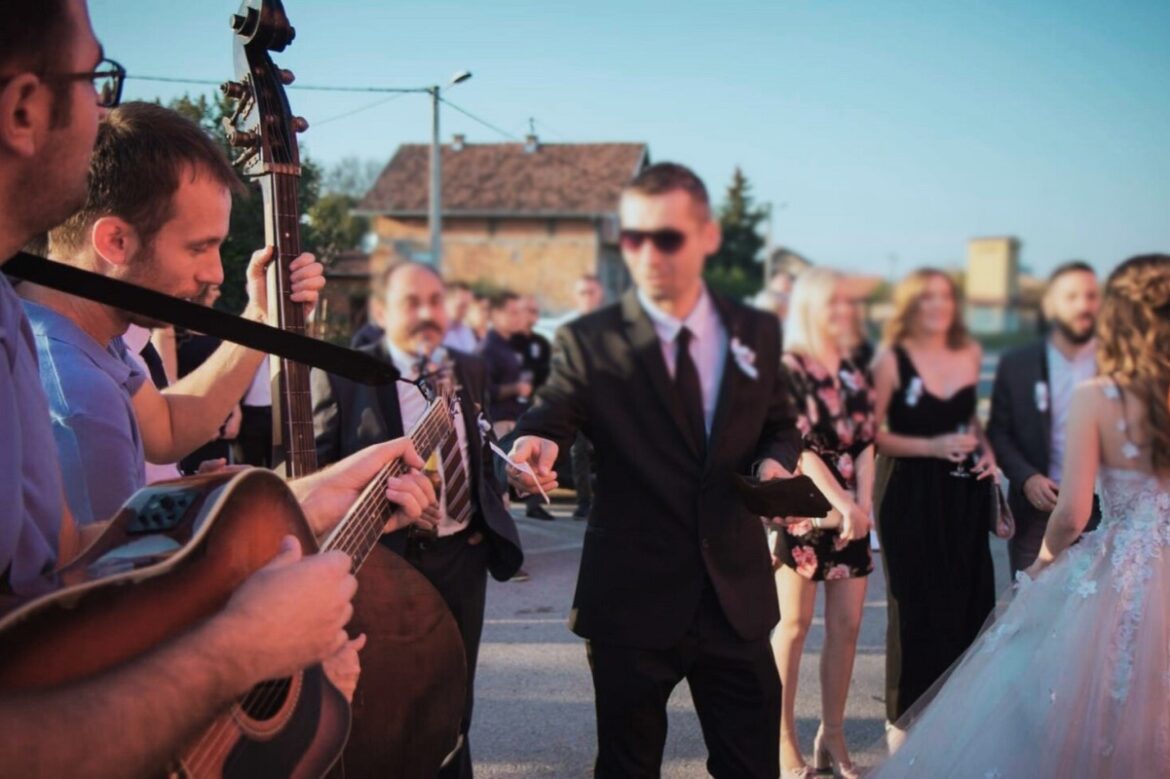
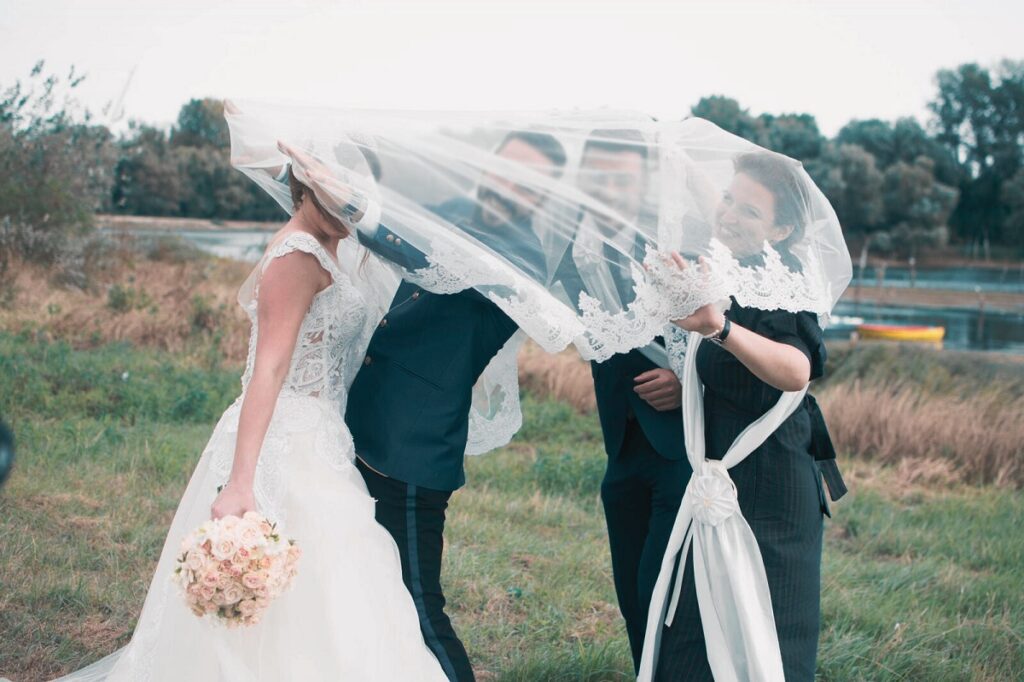
wedding kumstvo
Newlyweds, kum and kuma (source: private archive)

Some time ago, I was asked to be a kuma at a wedding, and of course I said yes. Saying no isn’t really an option, but even if it were, why would you? Around here, that kind of invitation means something. It’s not just an honor, it’s a declaration: “We’re family.” It’s not just a title for the day. It’s a lifelong role. Even now, years later, that one word still carries the same weight every time someone calls out, “our kuma.”

Chosen for Life: The Weight of Tradition

There’s a saying around here: “Bog na nebu, kum na zemlji” – God in heaven, kum on Earth. It’s not just a catchy phrase. It reflects how seriously this bond is taken. The kum holds a place of deep respect, second only to the divine. They’re not just a guest at life’s big moments. They’re right there beside you, trusted and honored, for life.

And of course, every microregion has its own take on kumstvo. Some families don’t allow kumovi to marry into each other because they’re considered spiritually related, and that would be, well, awkward. Others keep things more formal, with rituals, gift exchanges, and visits that follow a kind of choreography passed down like secret dance steps. There are even two families who have been each other’s kumovi for over 400 years. Now that’s commitment!

But no matter where you’re from or how the traditions play out, one thing stays the same: the bond. A kum shows up. For the weddings and christenings, of course, but also for the funerals, the hospital visits, and the heavy moments when just being there speaks louder than words. They’re part of your circle in both the bright and the quiet chapters. Maybe you don’t talk every day, but when something big happens, they’re the first call.

Sometimes, being a kum means nothing more than sitting together in silence, sipping coffee and letting the world slow down for a bit. It’s that quiet presence, that unspoken understanding, that makes it so uniquely Balkan. If you’ve ever experienced ćejf, the art of doing nothing and loving every second, you’ll know exactly what I mean.

It’s Not Just Tradition – It’s How We Stay Connected

So yeah, kumstvo is kind of a big deal. It’s not just a ceremonial handshake and a few fancy photos. It’s a lifelong backstage pass to someone’s most important moments. You get a front-row seat at the celebrations, a quiet chair at the hard stuff, and probably more than a few plates of sarma along the way. It’s messy, beautiful, sometimes hilariously complicated, and always worth it. Around here, being someone’s kum or kuma means you’re officially part of the chaos, the comfort, and the coffee breaks. And honestly? That’s what makes kumstvo so special. You don’t have to grow up with it to appreciate it. Just knowing these kinds of bonds exist, chosen and trusted and lasting, is a reminder that family can be bigger than we think. 

Curious about more Balkan bonds, quirks, or traditions? I’m always up for a chat – especially if coffee’s involved. Whether you’re planning a visit or just want to dive deeper into what makes this place so special, don’t hesitate to reach out. 

10/04/2025 0 comments
0 FacebookTwitterPinterestEmail
time for keyword research
Blog Management Services

Your Ideas Are Ready – Now It’s Time for Keyword Research

by Vanja 27/03/2025

If you’ve gone through the first steps and your initial brainstorming session – getting all those raw ideas out of your head, and starting to organize them into something coherent – you’re in a great spot. What you’ve created are your seed ideas. These are the starting points for your content, the rough building blocks that reflect your own perspective, experience, or the topics you’re excited (or even just curious) about. 

At this stage, keyword research can help you refine and expand these ideas, turning them into terms and phrases your audience is actively searching for. You might have noticed already at this stage that some keywords are showing up naturally in your notes or outlines. Maybe they’re terms your audience uses, phrases that come up in your own explanations, or just things you keep repeating without realizing it. That’s a good sign and means you’re already tapping into real language that people might be searching for. 

Many are intimidated by this phase but it’s actually a very natural process. Think of it more like a bridge between your ideas and your audience. It’s not about chasing trends or stuffing your content with buzzwords; it’s about understanding how people search for the kinds of things you’re already talking about and using that insight to shape your content in a way that makes it easier to find.

Finding the Words Your Audience Is Already Using

Keyword research is the process of identifying and analyzing the words and phrases people use when searching for information, products, or services on search engines like Google. It’s a crucial part of SEO because it helps you understand your audience’s search intent. By knowing what they’re looking for, you can create content that aligns with their needs, improving your chances of ranking higher in search results.

Why it matters:

  • It helps you target topics your audience is already interested in.
  • It gives you insight into the language your audience uses (important for writing in a relatable way).
  • It helps you find a balance between popular terms (that lots of people search for) and low-competition terms (that are easier to rank for).
  • It can inspire new blog posts, product descriptions, FAQs, and more.

It isn’t meant to override your creativity – it’s simply a tool to help your ideas land in the right place. You’ve done the intuitive work; now we’re just layering in a bit of strategy.


doing keyword research
Stadtbibliothek Stuttgart (Source: private archive)

So, How Do You Actually Do Keyword Research?

Start with your seed ideas – the ones that came out of your brainstorming. Pick a topic and jot down a few phrases or questions someone might type into a search bar if they were looking for content like yours. 

Then, take those rough ideas and plug them into a keyword research tool. Free options like Google’s Keyword Planner or Ubersuggest are great places to start, and paid tools like Ahrefs or SEMrush offer more depth if you need it. These tools will show you how often people search for those terms, how competitive they are, and suggest related keywords you might not have thought of. Look for a healthy mix: keywords that get some traffic but aren’t completely saturated with competition. Long-tail keywords (more specific, often longer phrases) are especially valuable early on, since they’re easier to rank for and usually signal clearer intent. 

As you collect terms, try grouping them into themes or clusters. This will help you plan out content that supports each other, rather than writing isolated posts that compete for attention. And remember: it is less about finding “magic words” and more about listening. You’re tuning into the way real people search, so you can meet them where they are.

Making Your Ideas Work for You

At the end of the day, keyword research isn’t about gaming the system, it’s about aligning your ideas with the language your audience is already using. You’ve already done the meaningful work of getting your thoughts out and shaping them into something worth sharing. This step just gives those ideas a better chance of being seen. It’s a mix of intuition and strategy, creativity and structure. And once you’ve got a handful of keywords you feel good about, you’re ready to start turning them into actual content. 

Don’t get stuck trying to make it perfect – take what you’ve figured out, trust your voice, and start writing. But if the process still feels overwhelming or like too much to juggle on your own, it might be time to bring in support. Book a free discovery call to see if blog management help is what you need to keep things moving with more ease and consistency.

27/03/2025 0 comments
0 FacebookTwitterPinterestEmail
view from rifugio parafulmine
Bergamo Alps Energy

Hiking Up, Slowing Down: A Visit to Rifugio Parafulmine

by Vanja 20/03/2025

The first time I was taken to Rifugio Parafulmine, which sits just below the ridge at 1,535 meters above sea level on the slopes of Monte Farno, I had no idea what to expect. I didn’t know how long the hike would take or what kind of terrain we’d be walking on. I just went along with the plan. We were short on time that day, so choosing this hike was a no-brainer for my local friends. Apparently, it’s one of those routes that doesn’t require hours of effort but still delivers that unmistakable mountain feeling.

What I also didn’t expect was how far up we’d drive before even starting. The road twisted higher and higher, and I started feeling a bit nervous. I’ve ended up hiking in spots before where I was totally unprepared, and for a moment, I thought this would be another one of those times. But to my great relief, the car did most of the climbing for the day. What was left was a short, steady incline on foot. Then, suddenly, wide open fields. It felt like standing in a valley, even though we were high in the mountains. That contrast really stuck with me.

Getting to the Trailhead

There are a few ways to reach Rifugio Parafulmine, and each one offers its own kind of experience. We, of course, took the shorter but harder route. Because, you know, locals and their idea of “easy” paths.

We drove for about 35 minutes from Bergamo and started from the Monte Farno parking area, which sits fairly high up already. This route takes about an hour and a half, not counting the time spent eating and drinking at the rifugio itself. While it’s not long, it does feel like a bit of a workout, especially at the start. The first section is fairly steep, so you’ll definitely feel it in your legs. But the payoff comes quickly. Once you get through that initial push, the trail starts to level out, and you’re rewarded with sweeping views of the surrounding peaks and valleys.

Since that was the only path I knew, it became my default. I’d always take it again, and I’d even suggest it to friends, without really thinking there might be an easier option. But apparently, the most popular route actually starts from Gandino. It takes a bit longer, about two hours, but it’s more gradual and winds steadily through forested paths before opening up to the same incredible views. I haven’t tried that one yet, but it’s definitely on my list for next time.


path to rifugio parafulmine
Path to Rifugio Parafulmine (source: private archive)

Reaching the Rifugio Parafulmine

Once that initial incline is behind you, the trail levels out and leads through open meadows with short grass, low shrubs, and the occasional tree. The area feels wide and exposed, with cowbells echoing near and far. The main road is easy to follow until you reach Baita Cornei. From there, after you’ve had your coffee or a different kind of short drink, you can choose from several smaller paths that either intersect with or run alongside the main one. Getting lost is almost impossible thanks to the open terrain and clear visibility, so it’s a safe place to explore if you’re in the mood for a little detour.

The final winding stretch up to the rifugio along the main path feels surprisingly easy. That may be because you know there’s food waiting at the end. My favorite part is a plate of homemade lasagna, a glass of something refreshing or warming depending on the weather, and a seat on the terrace with wide open views all around.

But if you’d like a bit of a challenge, there’s also a much steeper shortcut you can take straight up the slope. A local friend of mine, who is twice my age, once suggested it to me. She climbed it without hesitation and tried to convince me to give it a go too. I respectfully declined, without a shred of shame, and continued my slow but very manageable ascent toward the rifugio.

And to give you an idea of exactly how convenient this place is, even I, who don’t know that many people in the region yet, ran into a friend up there!

The Experience: Warm Meals, Stunning Views, and Cozy Vibes


thermometer at rifugio parafulmine
“Is it hot… or is it cold?” in Bergamasco language
(source: private archive)

What makes Rifugio Parafulmine special isn’t just the ease of the hike or the views from the top. It’s how comfortably it fits into a day, without feeling like you’ve missed out on anything. It felt like the perfect balance, short enough to squeeze into a tight schedule, yet still offering that satisfying sense of getting away from everything. You know that feeling, when you’re not far from home, but the air is cooler, the sounds are quieter, and everything just slows down a bit.

The trail isn’t too demanding, the food is always comforting, and the atmosphere is low-key and welcoming. You don’t have to overthink it. You can just decide to go, and be there within a couple of hours. That simplicity is part of its charm.

Sometimes, shorter hikes can feel like a compromise, like you’re cutting corners. But this trail doesn’t feel that way, much like the one to Monte Isola. It’s quick, yes, but it still gives me that sense of escape I look for in the mountains.


Bergamo Alps Energy Newsletter


Stories, trails, and a few little local details, delivered every now and then.

You can unsubscribe anytime. For more details, review the Privacy Policy.

You’re in!


Thanks for subscribing. Looking forward to sharing stories, trails, and a little bit of the Bergamo Alps with you soon.

Thinking of Heading Up There?

Curious about Parafulmine or not sure which trail to take? I’m always happy to swap route ideas or share the little details that don’t show up on maps. If you’re planning a visit and want a second opinion, or just someone to reassure you that yes, lasagna at the top is a solid life choice, feel free to reach out. And if you like low-key hikes, mountain stories, or finding new spots that don’t feel overcrowded, I share more of those from time to time in the newsletter above. No fluff, just the kind of stuff I’d tell a friend who’s thinking of heading out.

20/03/2025 0 comments
0 FacebookTwitterPinterestEmail
  • 1
  • 2

About Me

About Me

Anchored & Exploring

I manage blogs, roam both outdoors and online worlds, and tell stories - slow, honest, and rooted in real life.

Blog Management Services Posts

  • The Importance of a Consistent Blog Voice

    22/05/2025
  • Outsourcing Blog Management: Is It Worth the Investment?

    24/04/2025
  • Your Ideas Are Ready – Now It’s Time for Keyword Research

    27/03/2025
  • First Content Brainstorming Session: Where to Start and How to Approach It

    27/02/2025
  • Getting Started: Planning the First Steps for a Consistent Blog

    23/01/2025

Bergamo Alps Energy Posts

  • Spa experiences in Lombardy: Where Relaxation Meets Chaos

    19/06/2025
  • Is visiting San Pellegrino Terme worth the drive?

    15/05/2025
  • Cascate del Serio: The Waterfall That Only Shows Up Five Times a Year

    17/04/2025
  • Hiking Up, Slowing Down: A Visit to Rifugio Parafulmine

    20/03/2025
  • Monte Isola: Lake Iseo’s Quiet Little Surprise

    20/02/2025

Balkan Essence Posts

  • Smoking Culture in the Balkans: Tradition, Ritual, and Daily Life

    12/06/2025
  • Traditional Balkan Cooking: How Grandmas Feed an Army Without Recipes

    08/05/2025
  • Kumstvo: The Sacred Balkan Bond You Just Don’t Say No To

    10/04/2025
  • Zlatni Rat Beach: Expect People, Pebbles, and Beauty

    13/03/2025
  • Ćejf: The Balkan Art of Doing Nothing (and Loving Every Second of It)

    13/02/2025
Footer Logo
  • Home
  • SEO & website Management Services
  • Bergamo Alps Energy
  • Balkan Essence
  • Contact
  • Privacy Policy
  • Cookie Policy (EU)

@2026 SIMPLY SEE ME obrt za sadržajni marketing, vl. Vanja Nedić - All Right Reserved.


Back To Top
Manage Cookie Consent
To provide the best experiences, we use technologies like cookies to store and/or access device information. Consenting to these technologies will allow us to process data such as browsing behavior or unique IDs on this site. Not consenting or withdrawing consent, may adversely affect certain features and functions.
Functional Always active
The technical storage or access is strictly necessary for the legitimate purpose of enabling the use of a specific service explicitly requested by the subscriber or user, or for the sole purpose of carrying out the transmission of a communication over an electronic communications network.
Preferences
The technical storage or access is necessary for the legitimate purpose of storing preferences that are not requested by the subscriber or user.
Statistics
The technical storage or access that is used exclusively for statistical purposes. The technical storage or access that is used exclusively for anonymous statistical purposes. Without a subpoena, voluntary compliance on the part of your Internet Service Provider, or additional records from a third party, information stored or retrieved for this purpose alone cannot usually be used to identify you.
Marketing
The technical storage or access is required to create user profiles to send advertising, or to track the user on a website or across several websites for similar marketing purposes.
  • Manage options
  • Manage services
  • Manage {vendor_count} vendors
  • Read more about these purposes
View preferences
  • {title}
  • {title}
  • {title}
simplysee.me by Vanja
  • Home
  • SEO & website Management Services
  • Bergamo Alps Energy
  • Balkan Essence
  • Contact