simplysee.me by Vanja
  • Home
  • SEO & website Management Services
  • Bergamo Alps Energy
  • Balkan Essence
  • Contact
Category:

Balkan Essence

smoking culture in the balkans
Balkan Essence

Smoking Culture in the Balkans: Tradition, Ritual, and Daily Life

by Vanja 12/06/2025

There’s one thing impossible to miss when visiting – the smoking culture in the Balkans. Smoke curls around street corners, drifts through cafés, and follows people like an invisible, persistent shadow. Whether you’re wandering a market, sitting down for coffee, or sharing a meal, chances are someone nearby is lighting up.

In the Balkans, smoking isn’t just a habit. It’s part of daily life, woven into conversations, meals, and celebrations. These countries rank high on global smoking charts because people don’t just smoke — they smoke like chimneys! 

Years ago I joked (and still stand by it) that if I were blindfolded, earplugged, and dropped at Belgrade airport, I’d know exactly where I was the moment the terminal doors opened. How? The smell of smoke. And the fact that no one’s waiting inside for their loved ones because they’re all outside, cigarette in hand.

Smoking Culture in the Balkans as a Social Ritual

What’s considered “recreational smoking,” just a few cigarettes a day, elsewhere might raise eyebrows, but here it’s hardly seen as a problem, especially when it follows long-standing social smoking traditions. 

Social smoking is supposed to mean only when you’re out with friends but in the Balkans social gatherings happen almost daily. Morning coffee blends into afternoon drinks, which turn into long evenings of ‘sijelo’ and before you know it, “occasional” smoking is just… smoking. In the Balkans, coffee itself is a social ritual, and cigarettes often come along for the ride.

Here a cigarette before and after a meal feels as natural as the meal itself. And on a night out, a drink in one hand and a cigarette in the other is almost choreography. Without the cigarette, people don’t know what to do with the spare hand.

The Puš-Pauza: More Than Just a Break

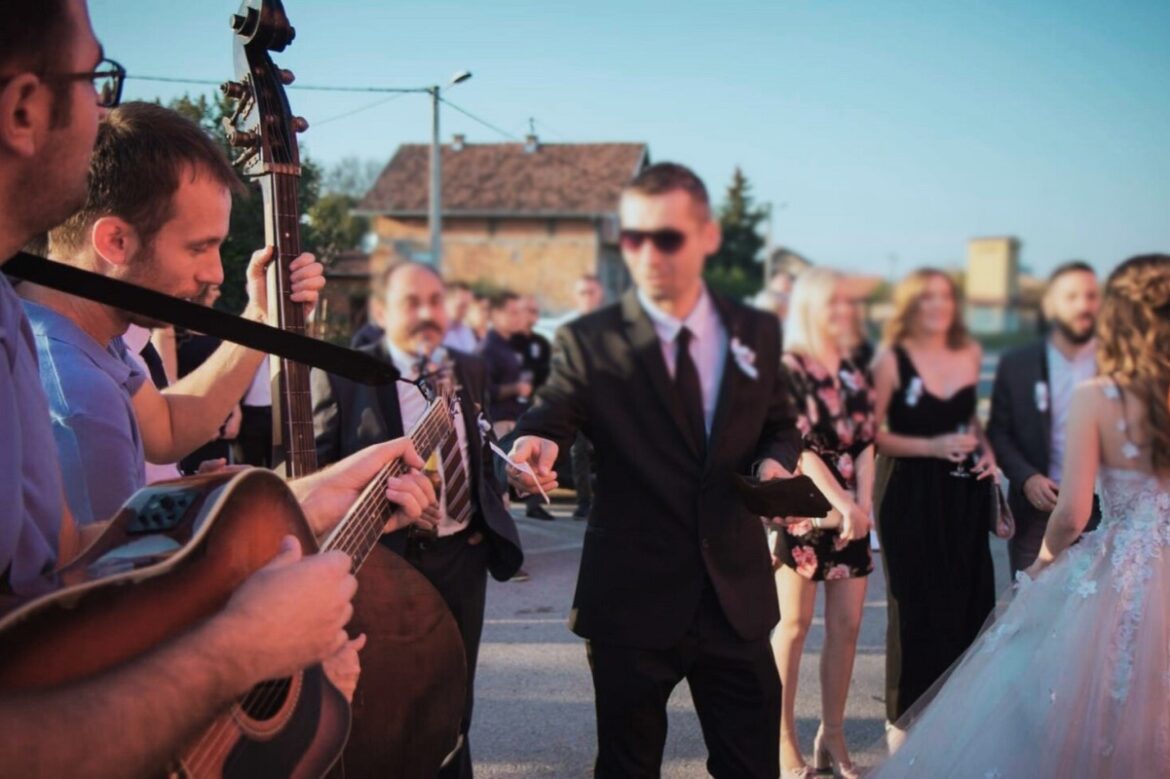
There’s also a ritualistic side to smoking. Even at weddings, family dinners, or workdays, people step outside for a cigarette. These smoke breaks, or puš-pauze, aren’t only about nicotine. They’re a few stolen minutes of escape.

Leaning against a wall or huddled under a tenda, conversations soften, jokes land easier, and time slows down. That’s why even non-smokers, myself included, sometimes tag along. It’s less about the cigarette itself and more about the pause it creates. Those few minutes outside have been holding space in Balkan life for decades, a little glimpse of ‘ćejf’, the art of taking life slow and enjoying every tiny moment.
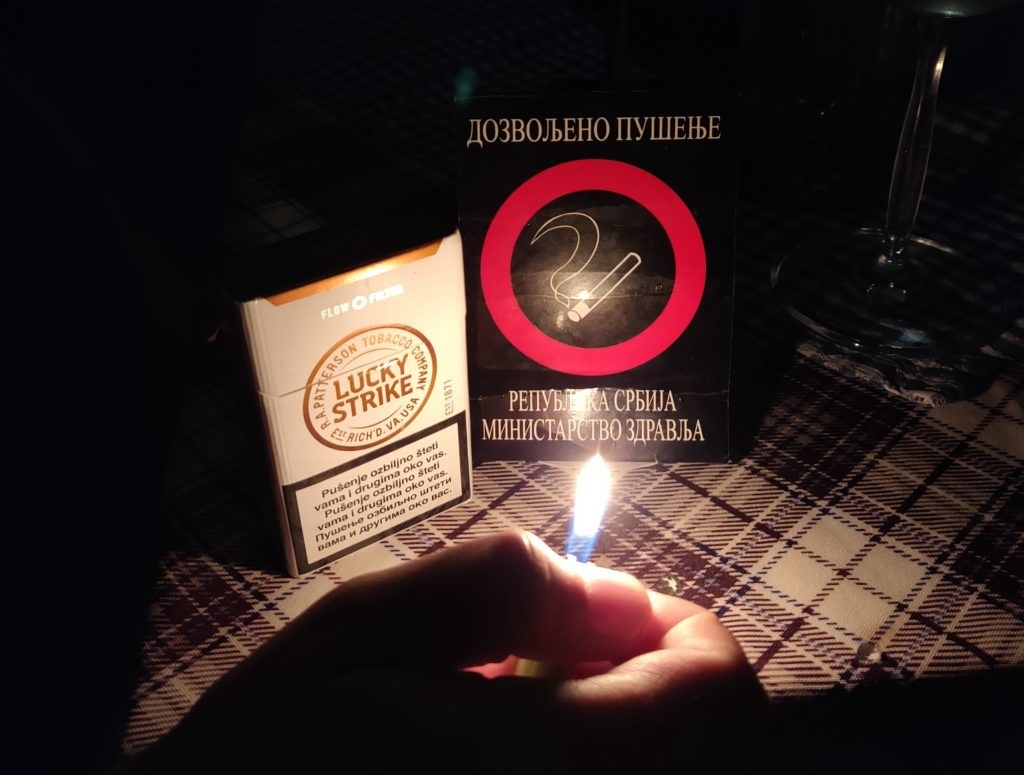

smoking in the balkans
Smoking allowed sign in kafana (source: private archive)

Traveling as a Non-Smoker: What to Expect

Visiting the Balkans as a non-smoker? You’ll notice the smoke right away, especially indoors. Cigarette after cigarette, the air thickens until you feel like you could cut it with a butter knife. If you’re not used to it, your eyes start itching and turning red, and you quickly realize that clean air is nowhere in sight. You might even wonder if sitting on the floor will help you dodge the smoke cloud at head height. Spoiler: it won’t.

Governments have tried to curb tobacco use by raising taxes, limiting ads, banning smoking in schools, hospitals, and partially in cafés and restaurants. On paper, it all sounds solid. In reality, when most of the population smokes, these rules are hard to enforce. An older but still relevant piece on the tobacco industry’s push into Eastern Europe shows how cigarette companies helped weave smoking into the fabric of social life, making it much harder to untangle today.

My Non-Smoker Survival Tactics

As a non-smoker, I’ve learned how to navigate the Balkan smoking habits that shape daily life. Living here means you adapt and sometimes just laugh at the absurdity of it all.

One classic tip for non-smokers? Brace yourself for extra laundry. Smoke sneaks into everything. Socks, shirts, even your favorite scarf, nothing is safe. Think of it as a smoky souvenir you didn’t ask for. I speak from experience. During a longer stay in my hometown, my mom suggested I wash all my clothes before flying back. I agreed, but when I opened my suitcase in my non-smoking flat, bam! A wall of smoke hit me. Every item went straight back into the washing machine. After that, even my cosmetics bag became machine-washable.

At family meals, I negotiate: “One smokes first, then the other.” I can’t stop them, but at least I can cut the smoke dose in half. I even threatened to bring a snorkeling mask so I could sit at the same table without suffocating. Honestly, I wasn’t even joking.

Growing up, I usually sat in the back of the car while my mom and sister chain-smoked up front. My solution? Roll down both back windows like my life depended on it. I still do the same at home, even in the dead of winter. They’re not happy about it, but hey, if they’re making me uncomfortable, I’ll do the same to them. An eye for an eye!

Finding the Charm Behind the Haze

But even if you’re a non-smoker, try not to let the smoke ruin your trip. Understand that locals aren’t trying to make you uncomfortable; it’s just part of their daily life. A polite word usually works better than a complaint, and most people are happy to adjust when asked. Or if you can handle it, toss a playful, curse-filled joke their way. Sometimes, they might respond with a puff in your direction and then smirk as they put the cigarette out, it’s Balkan humor at its finest.

If you lean into it a little, breathe through the haze, and accept the rhythm of long coffees, short smoke breaks, and endless chatter, you might discover a side of Balkan life that’s both messy and strangely welcoming.

If you’ve spent time in the region, I’d love to hear your take on the smoking culture in the Balkans. Did it surprise you, frustrate you, or maybe even feel a little charming? I’m always curious how other travelers experience this part of daily life.

P.S. Have you noticed this whole post is about smoking and not vaping? You know why? In the Balkans, vaping is still very much a “niche hobby,” while cigarettes run the show.
12/06/2025 0 comments
0 FacebookTwitterPinterestEmail
pita traditional balkan cooking
Balkan Essence

Traditional Balkan Cooking: How Grandmas Feed an Army Without Recipes

by Vanja 08/05/2025

Whether you’re walking through a small village or a big city, the smells of traditional Balkan cooking are everywhere: sweet and salty, juicy and savory, just pick your favorite from the air. At any time of the day or night, the smell of traditional food drifts through the streets, coming from windows, balconies, and even stairwells in apartment blocks. In the Balkans, a home-cooked meal made from scratch isn’t just common. It’s expected.

Eating just a salad for lunch? Absolutely frowned upon by every grandma. Never mind if you’re worried about your health, weight, or anything else. Lunch isn’t lunch unless it starts with soup, followed by meat and a side dish, plus a fresh salad, and then something sweet. All homemade. Every time.

And don’t even get me started on the Sunday morning broth “tradition”. You have to prepare it in the biggest pot imaginable so it can be used as a base for all the soups in the week ahead. That pot needs to simmer for hours. And if you think you can just leave it alone for a bit, think again. The key to a clear broth is making sure it never boils, so you need to watch it like a hawk.

Sometimes I’m afraid to admit I don’t have time for it because my weekends are usually packed with outdoor plans as I can already imagine my grandma’s response: “What could be so important? Hiking? Pff. Get up at two in the morning, make the broth, then go climb your mountain. Simple.”

Growing Up in the Kitchen

I used to spend hours watching my grandmas and my mom cook. Sometimes willingly, and sometimes as a form of punishment. Sometimes I was just there to “help,” which mostly meant staying out of the way while absorbing the kitchen chaos. Other times, I was handed a task I couldn’t escape from, like stirring endlessly or grating my weight in apples.

One of my grandmas moved around the kitchen with such speed and agility, I’d forget how old she actually was. She was like an octopus, stirring, washing, kneading, all at once, making sure everything was ready when the family sat down.

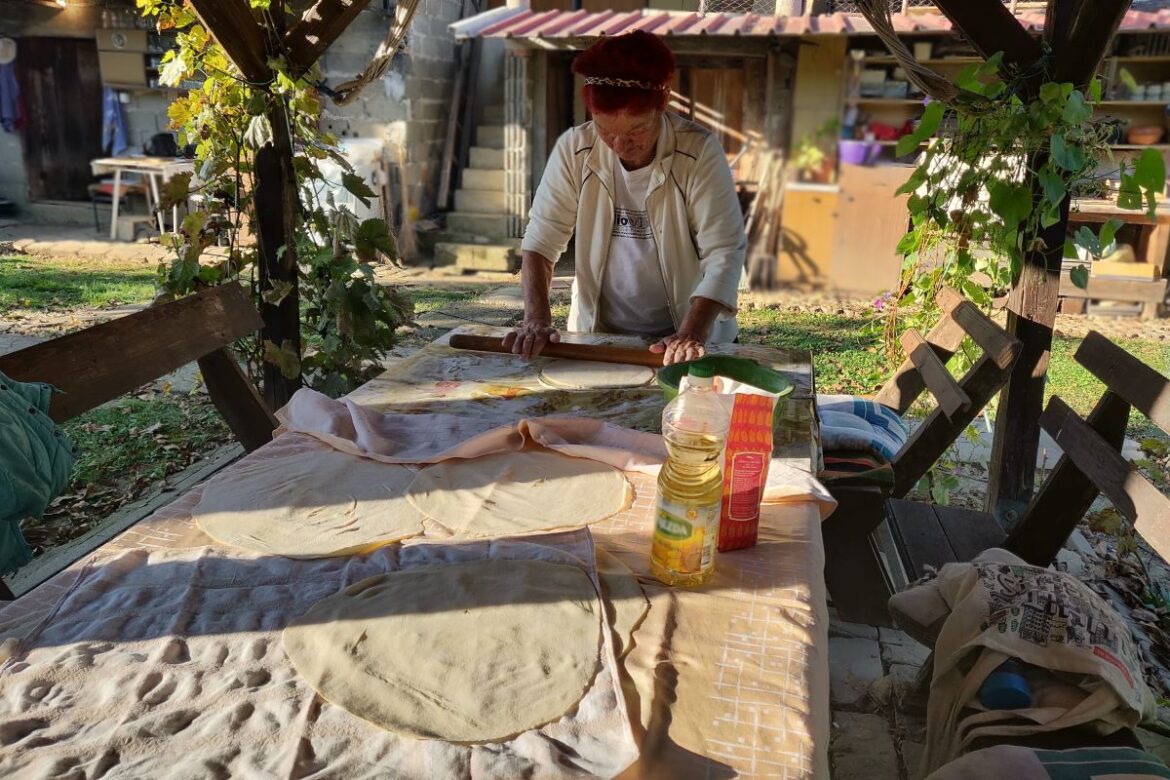
That’s one grandma’s style. The other grandma was… different. She’d wait until everyone was already seated, then casually get up to prepare the salad (the only thing she was supposed to make). My dad prepared the salty dishes, my mom the sweets and yet we still weren’t ready because grandma’s salad wasn’t done. You’d think we’d get used to it. We never did. Still drives us all nuts. But ask her to make pita and she never disappoints, as in the picture above.

What fascinated me most was how none of them ever looked at a recipe. No cookbooks. No notes. No scales. Everything was in their heads. The only exception was my grandma’s sister, who spent most of her life in Germany and is, by now, practically German. So no hard feelings there.

Whenever I asked questions like “How long do you cook this?” or “How much salt do you add?” the answer was always the same: odokativno.

Odokativno: The Art of Estimating

There’s no perfect English translation for this word. “Approximately” is close, but not quite right. At its core, odokativno means “by the eye,” a mystical grandma power that somehow calculates the weight of potatoes just by looking at them. I’m convinced they have built-in laser sensors in their eyes. Of course I tried doing the same. And I failed epically (I’m looking at you batches of gnocchi made from too many boiled potatoes casually sitting in my freezer).

On one of the most popular local recipe websites, the biggest issue with traditional dishes is always the measurements. Every time I land there looking for a recipe, the instructions go like this:

How much salt? Odokativno.
Flour? Usually 500 grams, but odokativno, depending on how it feels when you knead.
Oil? Around 100 milliliters, odokativno, maybe less.

The ingredients are simple, but the process is a science. Or witchcraft. You need to know when the dough is ready. You need to sense the exact water temperature, because lukewarm really means lukewarm, not hot or cold. You have to decide how much of each ingredient to add just by feel. The tiniest mistake can throw the whole thing off.


traditional balkan cooking
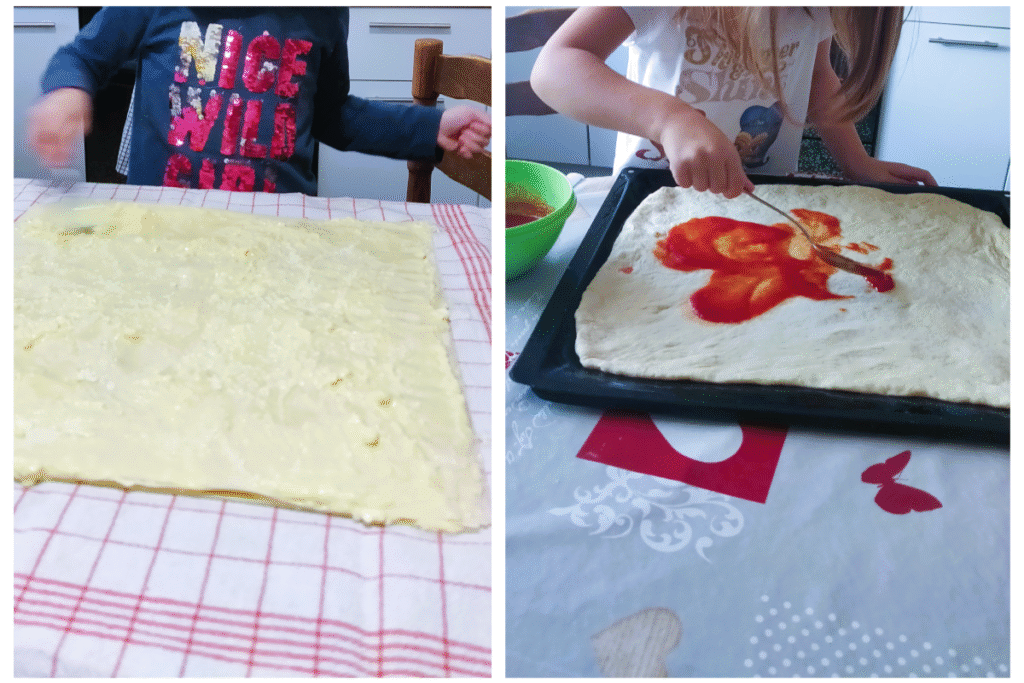
Apprentice in action. (source: private archive)

And we’re not talking about Michelin-starred chefs or trained food technicians. These women came from all walks of life – some worked in schools, others in offices, factories, farms, or fields – but no matter what their day job was, they still had to come home and feed the family. All that knowledge was passed down from their mothers and grandmothers. Barely anything was written down. You just had to know it.

The Only Recipe in Traditional Balkan Cooking Is Memory

Still wondering how anyone pulls this off without measuring cups or timers? Yeah, welcome to the Balkan Essence. Good luck escaping once it pulls you in.

So there’s really no better way to learn traditional Balkan cooking than by watching. And touching. Feeling the water, the texture of ingredients, the smell of the spices, making mental notes of every step. And making mistakes. So many mistakes. That’s why we start young and continue to pass the knowledge down, one kitchen session at a time.

If this peek into traditional Balkan cooking made you hungry (in any sense of the word) feel free to reach out. Whether you’re curious about how things are really done in a Balkan kitchen, looking for a recipe tip, or dreaming of a trip that includes a few home-cooked meals, I’m always happy to share more from this culture where love is most often served on a plate.

08/05/2025 0 comments
0 FacebookTwitterPinterestEmail
kumstvo tradition
Balkan Essence

Kumstvo: The Sacred Balkan Bond You Just Don’t Say No To

by Vanja 10/04/2025

In the Balkans, family isn’t just about blood. Sometimes, it’s assigned. Sometimes, it’s chosen. And sometimes, it’s a little bit of both, wrapped in incense smoke, wedding toasts, and traditions that go way back. That’s kumstvo.

Kumstvo (pronounced “koom-stvo”) is one of those things that everyone here understands instinctively, even if they’d have a hard time explaining it to someone from the outside. It’s not just a role. Or a title. It’s… well, sacred. Like, cross-your-heart-and-never-break-it kind of sacred.

If you’ve never heard of it, let me try. A kum or kuma is someone you choose to stand by you during life’s big moments, like baptisms or weddings, and from that day on, they’re family. Not by blood, but by bond. It’s a way of saying, “You’re my person, for life.” That connection is sealed tighter than grandma’s pickle jars. Spiritual family. Chosen. Trusted. Permanent.

And you never say no.

You Don’t Say No to Kumstvo

Seriously. That’s a rule. “Kumstvo se ne odbija” means you don’t refuse kumstvo. If someone asks you to be their kum or kuma, you nod, you smile, maybe cry a little (or a lot), and say yes. 

I’ve seen the “you don’t refuse” rule in action more times than I can count. My own father has been chosen as kum by so many of his friends over the years that I’ve completely lost track of all his “kumići” (which is what we call the kids he’s been a godfather to). The network is so wide and tangled, it’s honestly impossible to map. At some point, I stopped asking who’s who. It’s just accepted that there’s always another kumče somewhere in the picture.


wedding kumstvo
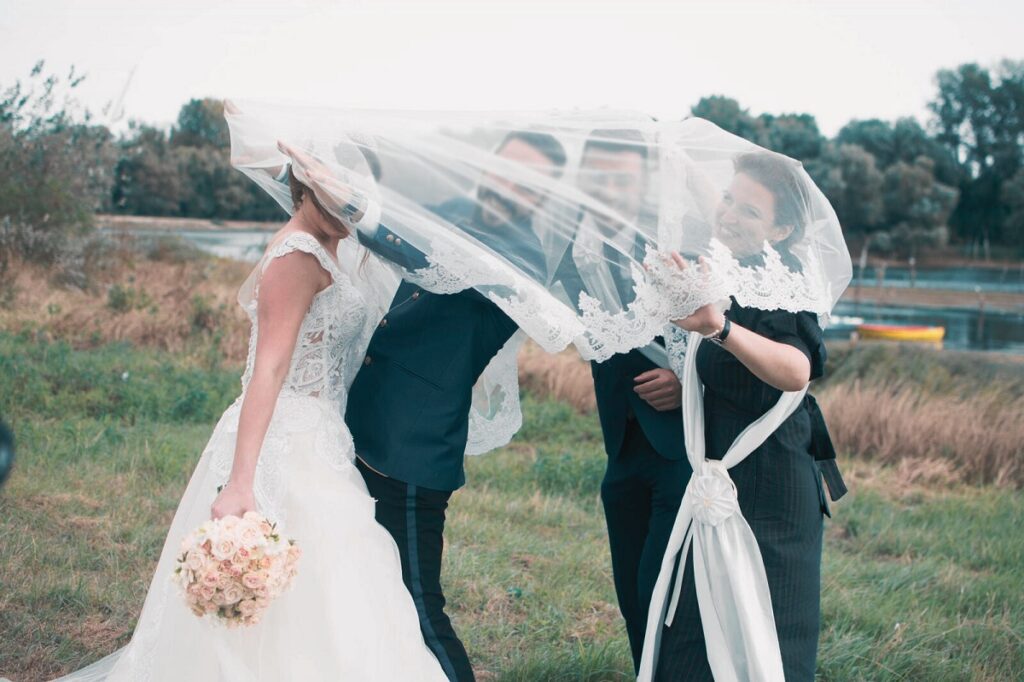
Newlyweds, kum and kuma (source: private archive)

Some time ago, I was asked to be a kuma at a wedding, and of course I said yes. Saying no isn’t really an option, but even if it were, why would you? Around here, that kind of invitation means something. It’s not just an honor, it’s a declaration: “We’re family.” It’s not just a title for the day. It’s a lifelong role. Even now, years later, that one word still carries the same weight every time someone calls out, “our kuma.”

Chosen for Life: The Weight of Tradition

There’s a saying around here: “Bog na nebu, kum na zemlji” – God in heaven, kum on Earth. It’s not just a catchy phrase. It reflects how seriously this bond is taken. The kum holds a place of deep respect, second only to the divine. They’re not just a guest at life’s big moments. They’re right there beside you, trusted and honored, for life.

And of course, every microregion has its own take on kumstvo. Some families don’t allow kumovi to marry into each other because they’re considered spiritually related, and that would be, well, awkward. Others keep things more formal, with rituals, gift exchanges, and visits that follow a kind of choreography passed down like secret dance steps. There are even two families who have been each other’s kumovi for over 400 years. Now that’s commitment!

But no matter where you’re from or how the traditions play out, one thing stays the same: the bond. A kum shows up. For the weddings and christenings, of course, but also for the funerals, the hospital visits, and the heavy moments when just being there speaks louder than words. They’re part of your circle in both the bright and the quiet chapters. Maybe you don’t talk every day, but when something big happens, they’re the first call.

Sometimes, being a kum means nothing more than sitting together in silence, sipping coffee and letting the world slow down for a bit. It’s that quiet presence, that unspoken understanding, that makes it so uniquely Balkan. If you’ve ever experienced ćejf, the art of doing nothing and loving every second, you’ll know exactly what I mean.

It’s Not Just Tradition – It’s How We Stay Connected

So yeah, kumstvo is kind of a big deal. It’s not just a ceremonial handshake and a few fancy photos. It’s a lifelong backstage pass to someone’s most important moments. You get a front-row seat at the celebrations, a quiet chair at the hard stuff, and probably more than a few plates of sarma along the way. It’s messy, beautiful, sometimes hilariously complicated, and always worth it. Around here, being someone’s kum or kuma means you’re officially part of the chaos, the comfort, and the coffee breaks. And honestly? That’s what makes kumstvo so special. You don’t have to grow up with it to appreciate it. Just knowing these kinds of bonds exist, chosen and trusted and lasting, is a reminder that family can be bigger than we think. 

Curious about more Balkan bonds, quirks, or traditions? I’m always up for a chat – especially if coffee’s involved. Whether you’re planning a visit or just want to dive deeper into what makes this place so special, don’t hesitate to reach out. 

10/04/2025 0 comments
0 FacebookTwitterPinterestEmail
zlatni rat beach
Balkan Essence

Zlatni Rat Beach: Expect People, Pebbles, and Beauty

by Vanja 13/03/2025

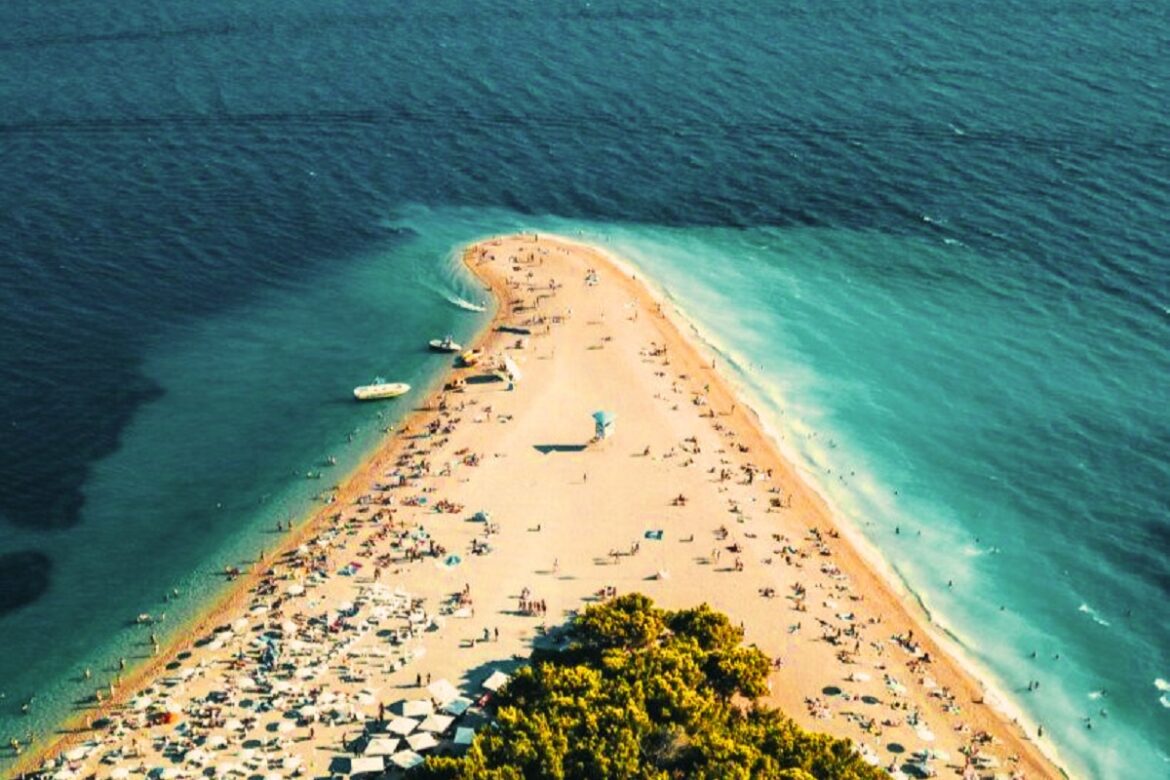
Whenever Croatia is featured in a travel story, chances are you’ll see an aerial shot of Brač Island’s famous Zlatni Rat beach. Its distinctive shape, a narrow strip of land stretching out into the turquoise Adriatic Sea, makes it instantly recognizable, almost like a natural logo for Croatian tourism. It’s the kind of place that feels almost too perfect to be real, often appearing in Best Beaches in the World lists and winning awards for its striking appearance. But what exactly makes it so special?

The magic lies in the beach’s constantly shifting tip. Natural forces like the tides, sea currents, and strong local winds shape its narrow peak. Some days, the point juts out straight into the sea; other days, it bends gently to the left or right. From above, this movement gives the beach a dynamic, almost surreal quality, like a landform caught mid-transformation. It looks less like a typical beach and more like an elegant peninsula reaching out from a dense green forest.

Locally, it’s known as “Zlatni Rat,” which translates to “Golden Cape” or “Golden Horn” but if you translate it too literally from standard Croatian, you might accidentally end up with “Golden War,” which sounds far more dramatic than intended. As a native speaker, I’ve always instinctively used the dialect pronunciation. It wasn’t until recently that it dawned on me that rat also means “war.” Croatian, like most Balkan languages, is a tangled and fascinating subject, but that’s a story for another time.

You’ve probably come across a few travel blogs or social posts about Zlatni Rat beach already, but let’s take a moment to get a few things straight before you set your expectations.

Getting the Facts Straight

First, most of the iconic photos are taken from the air. That dreamy view of a narrow, white spit reaching into the turquoise sea? You won’t get that just by standing on the beach. On the ground, it looks completely different. If you want a view that even comes close, you’ll need to hike up to Vidova Gora, the highest peak on Brač (and actually the tallest of all the Croatian islands). The hike isn’t particularly challenging, and once you’re at the top, the sweeping views of the beach and the surrounding islands are stunning. It’s well worth the effort.

Next, it’s not a sandy beach, it’s covered in pebbles. Some people love the feel of smooth stones under their feet; others, not so much. Just know that the pebbles aren’t going anywhere. On hot days, they heat up fast, and walking barefoot can feel like crossing hot coals. Water shoes may not be glamorous, but they’re practical. And when it comes to sunbathing, either bring a proper mat or rent a sunbed, you’ll thank yourself later.


Zlatni Rat (source: Unsplash)

Keep in mind that this place is far from a hidden gem. It’s one of the most photographed beaches in Croatia, and during peak season, it attracts plenty of visitors. Yet surprisingly, it was ranked as the third least overcrowded beach in Europe, a fact that might seem unexpected given how often it appears in travel guides and floods social media feeds. (Honestly, I don’t even want to imagine how crowded some of the others must be!)

One possible reason is that Brač is an island, accessible only by ferry or water taxi. It’s not the kind of place you just stumble upon. But if you take the time to plan your visit, the island’s laid-back charm and slower pace make the trip more than worth it.

Making the Most of Your Visit to Zlatni Rat Beach

This place is absolutely worth seeing. Mother Nature really outdid herself with this one; it’s one of those rare spots that looks just as stunning in real life as it does in the photos, from the right angle of course. The key to enjoying it, though, is managing your expectations. Yes, it’s beautiful. No, it’s not private, not sandy, and definitely not cheap.

This isn’t the kind of beach you stumble upon without a plan, expecting a peaceful stretch of paradise to yourself. It’s popular, it’s busy, and it comes with a price tag. That doesn’t mean it’s not enjoyable, it just means you’ll enjoy it more if you go in knowing what to expect.

Don’t try to rush your experience here. Let the island set the pace. Brač moves to a slower rhythm, and the beach fits right into that mood. Zlatni Rat is more about soaking in the view, the sun, and the atmosphere than chasing activities or entertainment. If you’re after a high-energy beach day, you might leave frustrated. But if you show up ready to take it slow, sip something cold, and appreciate the scenery, you’ll get it.

And don’t expect to mingle with locals on the beach, they know better. The few you might see are probably working nearby or enjoying their coffee under the pine trees, unbothered and unhurried, following the quiet rhythm of cejf.

Slow Down and Soak It In

So go. See it. Let yourself be impressed. Just do it on island time, with your expectations in check, and you’ll leave with a memory far better than anything a filtered photo can capture.

And if you’re planning a visit and want a local tip or two, feel free to reach out. I’m always happy to help fellow travelers find their way.

13/03/2025 0 comments
0 FacebookTwitterPinterestEmail
cejf the balkan way
Balkan Essence

Ćejf: The Balkan Art of Doing Nothing (and Loving Every Second of It)

by Vanja 13/02/2025

While in the West everything is sacrificed at the altar of usefulness and productivity, where even rest has to be “scheduled” and “optimized”, we in the East like to do things a bit differently. Our guiding philosophy is ćejf (pronounced “cheyf”), and yes, we even turned it into a verb: ćejfiti. That’s how serious we are about not taking things seriously. I’ll call a friend and ask, “What are you doing?” and if the reply is “ćejfim,” I know I called at the wrong time. That person is busy – busy being not busy.

There’s no real English equivalent for this word, which is already a sign that the concept might short-circuit the average overachiever’s brain. The closest translation might be: “the deep, soul-nourishing enjoyment of doing absolutely nothing productive whatsoever.” But even that doesn’t quite capture it. 

Ćejf is sitting on your balcony with a tiny cup of strong coffee, not because you need caffeine, but because it’s a sacred ritual. It’s reading the newspaper slowly, not skimming headlines for stock updates, but flipping through every page like you’ve got all the time in the world (because you do). It’s watching the world pass by, judging people’s shoes, or having full-blown conversations with your neighbor about the weather, goats, or how tomatoes used to taste better.

Between Sips and Silences: The Rhythm of ćejf

Of course, this being the Balkans, there’s no single definition of ćejf. Everyone defines it for themselves and decides how to do it, because it’s a deeply personal ‘activity’ – though calling staring into oblivion an activity feels like cheating.

Some treat it as a sacred morning ritual, faithfully carried out at one of the countless local coffee bars – the kind of places where the waiter doesn’t ask what you’ll have; he just brings it, because he’s known your coffee order since you were twelve. Despite the familiarity, everyone knows everyone, conversation is minimal. There’s an unspoken agreement: we’re all here, we all exist, but let’s not talk about it just yet. People sit in quiet meditation, barely breathing, wrapped in sacred morning silence, holding newspapers not to read, but to hide behind. The entire scene looks like a coffee-scented still life. No one’s rushing. No one’s planning. It’s a collective moment of mental stretching before the day begins – an ancient practice of psychological warm-up, Balkan-style. Coffee in hand, newspaper in front, eyes half-open… and that’s exactly how it’s meant to be.

Others prefer to ćejfiti in the afternoon. If the morning ćejf is about silent preparation for the chaos of the day, the afternoon version is about recovering from having survived it. Nobody’s checking their emails. Nobody’s writing in planners or listening to productivity podcasts. Instead, they’re watching pigeons fight over breadcrumbs, arguing about soccer matches from three days ago, or just leaning back with that deep, philosophical look that says, “Don’t ask me what I’m thinking about, because I’m not.” And that’s the beauty of it.


cejf my way
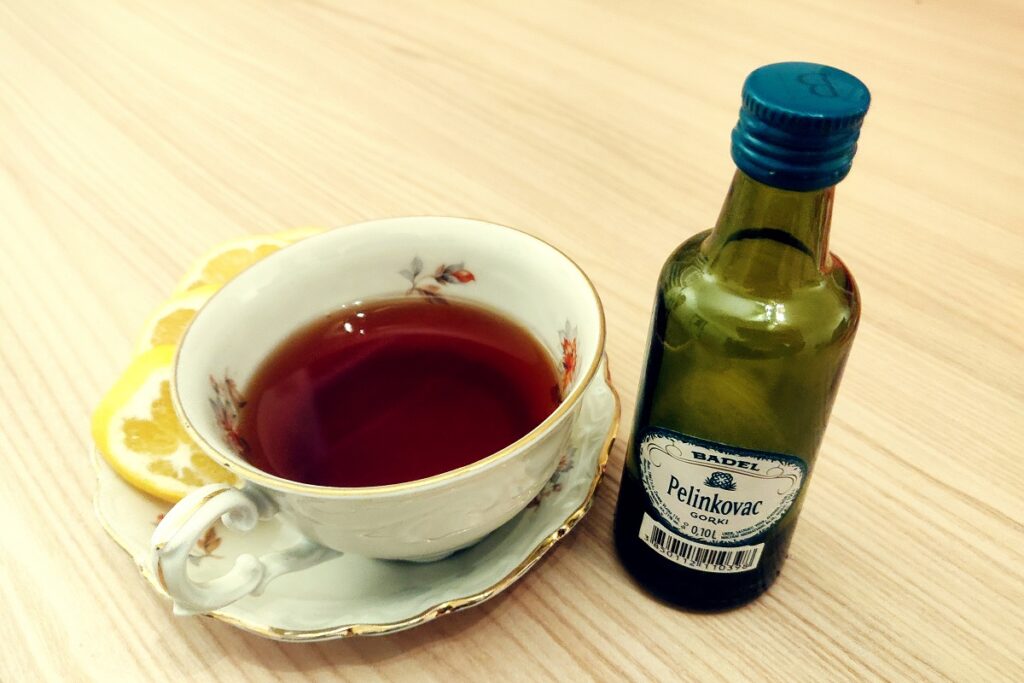
My ćejf? Sipping pelinkovac from an antique teacup. Why? Just because. (Source: private archive)

Pleasure Without Purpose: Why ćejf Is the Pause We All Need

There’s no right or wrong way, or time, to practice ćejf, because it’s all about finding deep satisfaction in small, personal pleasures and rituals. Whether it’s the simple act of sipping your coffee slowly or sitting in silence while the world passes by, ćejf invites you to immerse yourself fully in the present moment. It’s a reminder that happiness doesn’t always come from big accomplishments or grand gestures – it’s often found in the everyday, quiet moments that allow you to reconnect with yourself.

Ćejf is more than just leisure; it’s a state of ultimate relaxation, a practice of embracing idle pleasure without guilt. It’s about slowing down, allowing yourself the space to breathe, to pause, and to enjoy the little things that make life worth living. It’s not about productivity or efficiency; it’s about being present, appreciating the simplicity of life, and taking the time to savor the world around you.

In the Balkans, ćejf offers insight into a culture that values personal contentment above hustle (maybe that explains our, let’s say, relaxed economic output?). It’s a way of life that celebrates the beauty of life’s simplest joys – whether that’s the warmth of a shared conversation, the feeling of the sun on your face, or the comfort of your favorite spot at the river bank. It’s the art of presence without pressure, of pleasure without purpose. And honestly? I think the world could use a lot more ćejf and a lot less hustle, because sometimes, doing nothing is exactly what we need.

Curious About ćejf, and Everything Around It?

If this glimpse into ćejf sparked your curiosity or made you wonder what life here really feels like, don’t hesitate to reach out – whether you’re simply intrigued or thinking of traveling to the region, I’d be glad to share more about its rhythms, rituals, and the quiet moments that make it so unique.

13/02/2025 0 comments
0 FacebookTwitterPinterestEmail
Coffee Time In The Balkans
Balkan Essence

Coffee time: a routine, a ritual, or a religion?

by Vanja 09/01/2025

Ah, coffee: the magical black potion, the source of life, the ruler of the walking dead. Okay, enough with coffee praising because even though I just had one, I could definitely go for another cup! It’s no secret that people across the Balkans are devoted coffee drinkers. To be honest, I wasn’t one of them until my early 20s. Until then, I couldn’t understand why coffee time in the afternoon was such a must. I saw it as an unnecessary habit, totally boring, and honestly, a waste of time. Ah, sweet, sweet, innocent child that I was.

My grandma and her neighbor drink their coffee at 3 or 4 PM, depending on the season, every single day. Over the years, others have joined them in this daily routine. These days, they actually organize their day around coffee time. All the work needs to be done by then, it marks the transition from “getting things done” to “taking it easy.” This hour of coffee preparation, people gathering, drinking, and cleaning up is the backbone of life. You don’t skip it. And if you do, you better have a solid reason. Whatever you do, don’t even think about having your coffee somewhere else if you already have an established group – that’s pure treason! If you do, you better come back with a juicy story to make up for it.

Nothing fancy, just coffee

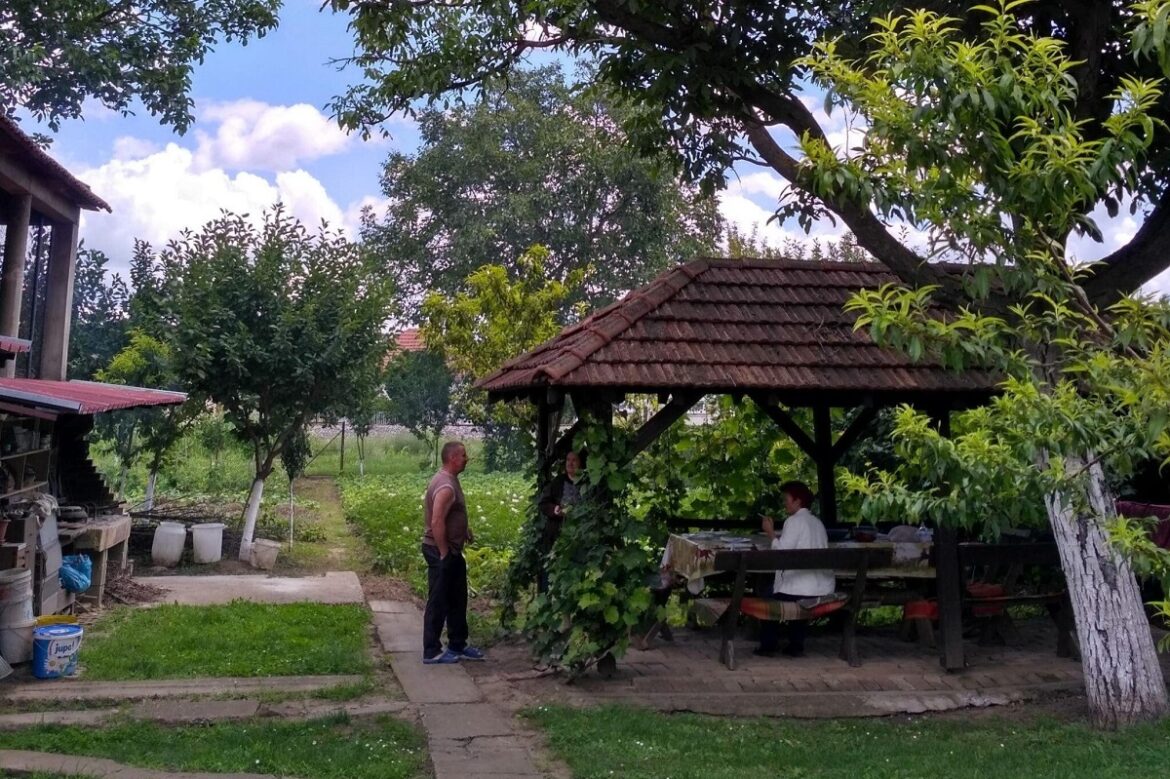
When I’m at grandma’s, we drink coffee outside in a ramshackle kind of gazebo, more about function than beauty, under a tree, exactly the one you see in the cover photo of this post. She makes what’s known here as Turkish coffee, prepared in a džezva that’s probably older than I am, on an old wood stove. It’s served on a battered platter in mismatched cups. Everyone has their own favorite cup from a different set, chosen to match their personal taste, so the collection is colorful – and definitely not fancy. And just like the cups, the personalities around the table are lively and contrasting (which is a nicer way of saying they’re usually very loud).


Coffee With An Italian

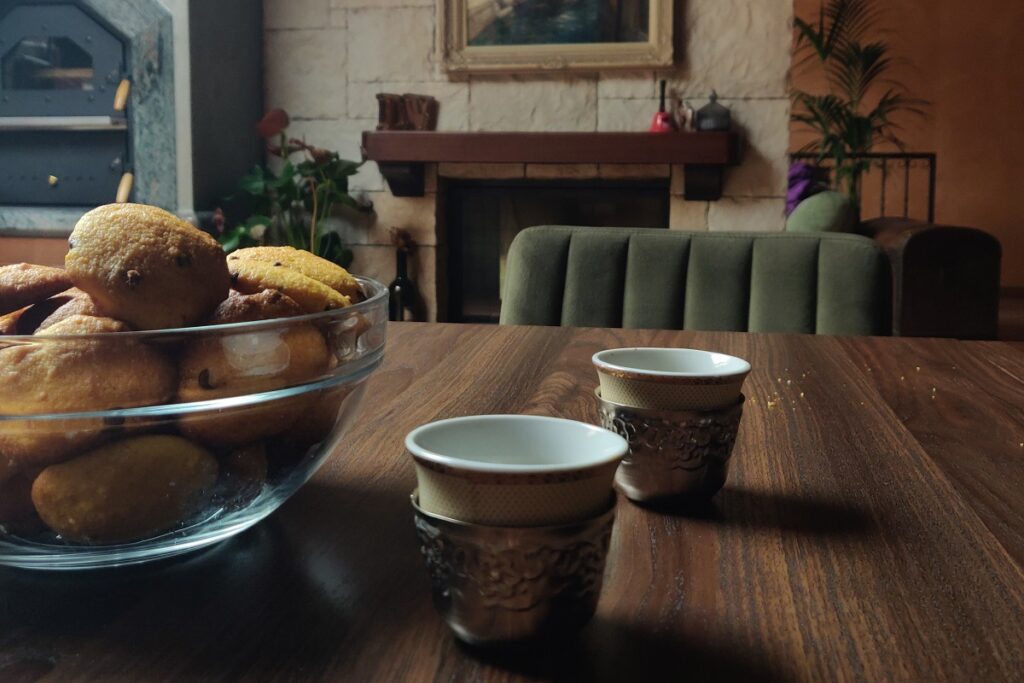
Since moving away from my hometown, I often dream of teleporting into my grandma’s yard just in time for coffee. It’s hard to recreate this ritual abroad without your people. It just doesn’t make sense to anyone else. The photo above shows me and my partner having coffee. He’s not imaginary – he just had his coffee and ran off, while I’m still sitting there, slowly sipping. That’s the difference with Italians: they gulp it down and get on with their day. We, on the other hand, mull over it for a long, long, looong time.

And I get it – they just don’t have the culture of ćejf, that sweet moment of enjoying doing nothing, just existing. I, on the other hand, can’t do what he does. I can’t just gulp boiling hot coffee. I tried, and burned all my internal organs in the process. Nope. I’m sticking to my practice of slow and mindful oblivion.

In the end, coffee time is meant to be shared

But even though coffee sits at the center of the experience, it’s never really about the coffee. It’s about the social need, for both quality and quantity, of time spent with people you love: family, kumovi, and friends.

Some of the best examples of local coffee habits come from stories shared on a regional website that collects true, often hilarious tales. Like the time a girl was woken up at 5:20 in the morning by a neighbor who had run out of sugar and couldn’t stand her coffee bitter. Or the guy who came home at dawn after a night of partying and forgot to put a sign on his door saying “coffee has been canceled,” so his friends showed up anyway – hangover or not. The ritual is so strong, people will knock on your door regardless. In this part of the world, coffee time has practically reached the status of a religion.

I used to ask myself: How do people not get tired of the same old thing: same coffee, same time, same people, day after day? But I’ve since come to realize how deeply entertaining and educational it can be to sit around the table with two or three different generations. You’ll hear everything: random trivia, passionate opinions, and some surprisingly solid wisdom. 

And there’s truly nothing sweeter than grandma’s coffee, and I don’t mean that figuratively. Even when she insists she didn’t add sugar, she did. Her motto? “If life is bitter, the coffee doesn’t have to be.”

Exploring the Region, Near or Far? Let’s Connect.

Whether you’re mapping out a trip or just daydreaming, I’m happy to offer insight, ideas, or just a good local story. Curious about something specific? Drop me a note through the Contact page and let’s keep the conversation going – maybe even over a cup of coffee (wink, wink).

09/01/2025 0 comments
0 FacebookTwitterPinterestEmail

About Me

About Me

Anchored & Exploring

I manage blogs, roam both outdoors and online worlds, and tell stories - slow, honest, and rooted in real life.

Blog Management Services Posts

  • The Importance of a Consistent Blog Voice

    22/05/2025
  • Outsourcing Blog Management: Is It Worth the Investment?

    24/04/2025
  • Your Ideas Are Ready – Now It’s Time for Keyword Research

    27/03/2025
  • First Content Brainstorming Session: Where to Start and How to Approach It

    27/02/2025
  • Getting Started: Planning the First Steps for a Consistent Blog

    23/01/2025

Bergamo Alps Energy Posts

  • Spa experiences in Lombardy: Where Relaxation Meets Chaos

    19/06/2025
  • Is visiting San Pellegrino Terme worth the drive?

    15/05/2025
  • Cascate del Serio: The Waterfall That Only Shows Up Five Times a Year

    17/04/2025
  • Hiking Up, Slowing Down: A Visit to Rifugio Parafulmine

    20/03/2025
  • Monte Isola: Lake Iseo’s Quiet Little Surprise

    20/02/2025

Balkan Essence Posts

  • Smoking Culture in the Balkans: Tradition, Ritual, and Daily Life

    12/06/2025
  • Traditional Balkan Cooking: How Grandmas Feed an Army Without Recipes

    08/05/2025
  • Kumstvo: The Sacred Balkan Bond You Just Don’t Say No To

    10/04/2025
  • Zlatni Rat Beach: Expect People, Pebbles, and Beauty

    13/03/2025
  • Ćejf: The Balkan Art of Doing Nothing (and Loving Every Second of It)

    13/02/2025
Footer Logo
  • Home
  • SEO & website Management Services
  • Bergamo Alps Energy
  • Balkan Essence
  • Contact
  • Privacy Policy
  • Cookie Policy (EU)

@2026 SIMPLY SEE ME obrt za sadržajni marketing, vl. Vanja Nedić - All Right Reserved.


Back To Top
Manage Cookie Consent
To provide the best experiences, we use technologies like cookies to store and/or access device information. Consenting to these technologies will allow us to process data such as browsing behavior or unique IDs on this site. Not consenting or withdrawing consent, may adversely affect certain features and functions.
Functional Always active
The technical storage or access is strictly necessary for the legitimate purpose of enabling the use of a specific service explicitly requested by the subscriber or user, or for the sole purpose of carrying out the transmission of a communication over an electronic communications network.
Preferences
The technical storage or access is necessary for the legitimate purpose of storing preferences that are not requested by the subscriber or user.
Statistics
The technical storage or access that is used exclusively for statistical purposes. The technical storage or access that is used exclusively for anonymous statistical purposes. Without a subpoena, voluntary compliance on the part of your Internet Service Provider, or additional records from a third party, information stored or retrieved for this purpose alone cannot usually be used to identify you.
Marketing
The technical storage or access is required to create user profiles to send advertising, or to track the user on a website or across several websites for similar marketing purposes.
  • Manage options
  • Manage services
  • Manage {vendor_count} vendors
  • Read more about these purposes
View preferences
  • {title}
  • {title}
  • {title}
simplysee.me by Vanja
  • Home
  • SEO & website Management Services
  • Bergamo Alps Energy
  • Balkan Essence
  • Contact